GRA Moissanite Certificates: What Buyers Need to Know (2026 Guide)
Learn why GRA moissanite certifications are unreliable and how to protect yourself. Expert guide to identifying trusted gemstone certifications from industry authorities.
 Sarah Mitchell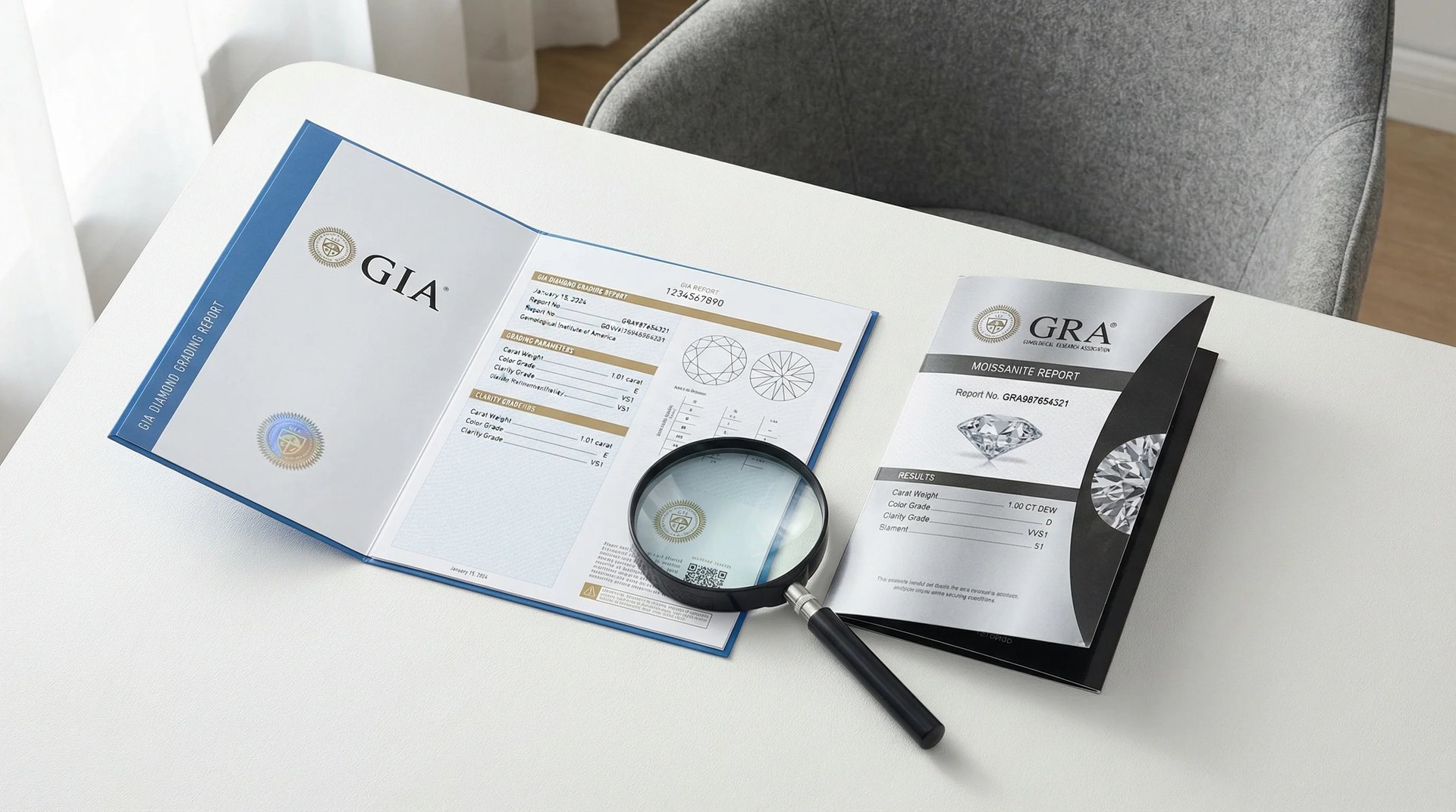
Spending hundreds or thousands on a moissanite ring only to discover the certification is worthless? It happens more often than you think.
If you're shopping for moissanite jewelry online, you've likely encountered certificates from organizations with official-sounding names like "GRA" (Gemological Research Association). These certificates look professional, include technical details, and seem to validate your purchase. But here's what the gemological industry doesn't always tell you upfront: not all certifications carry the same weight—and some carry none at all.
In this guide, we'll explain what GRA certifications actually are, why gemological experts and industry professionals question their reliability, and most importantly, how you can protect yourself when buying moissanite. By the end, you'll know exactly what to look for in a trustworthy certification and how to make informed decisions about your jewelry purchase.
What is GRA and Why the Confusion?
Understanding GRA Certifications
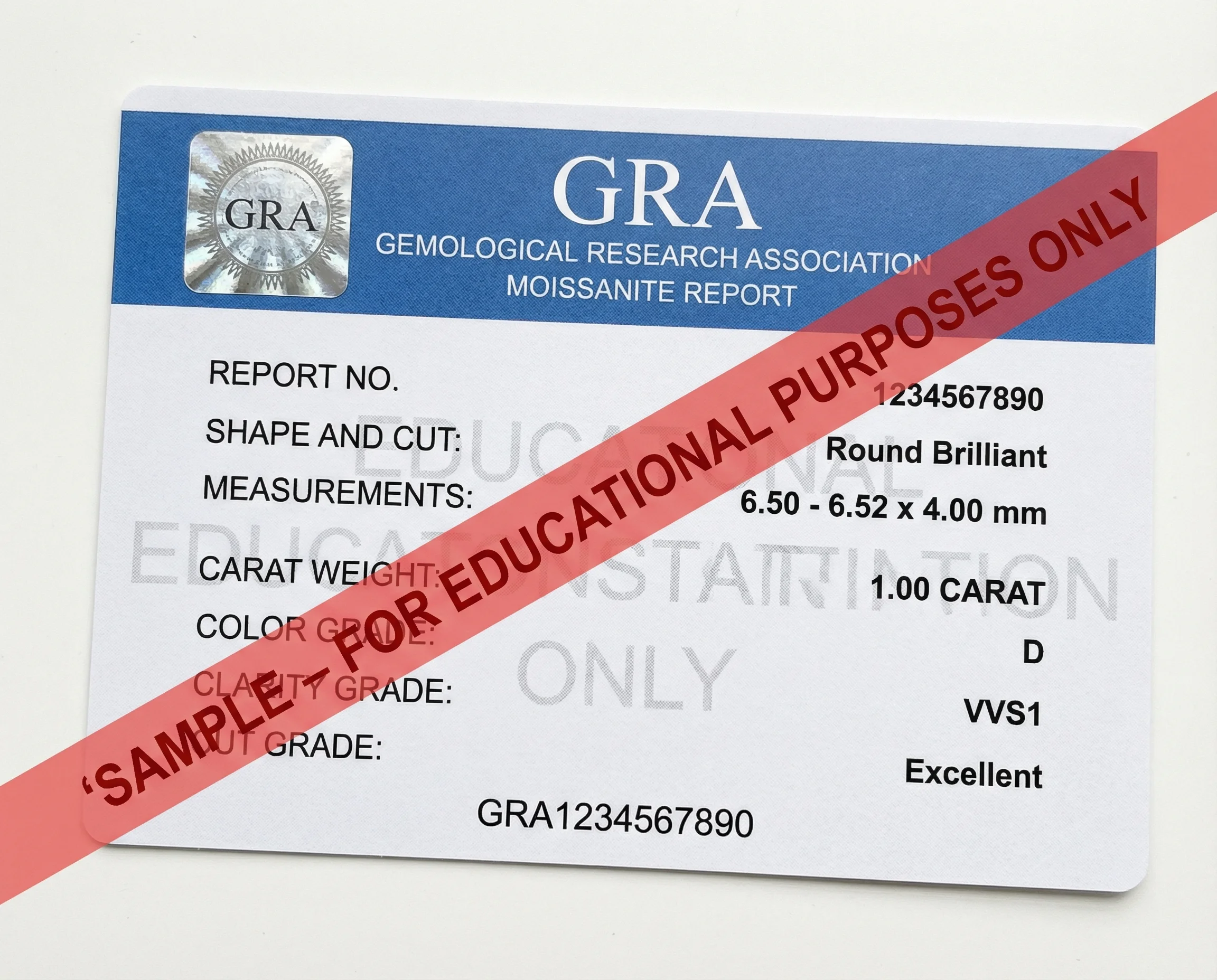
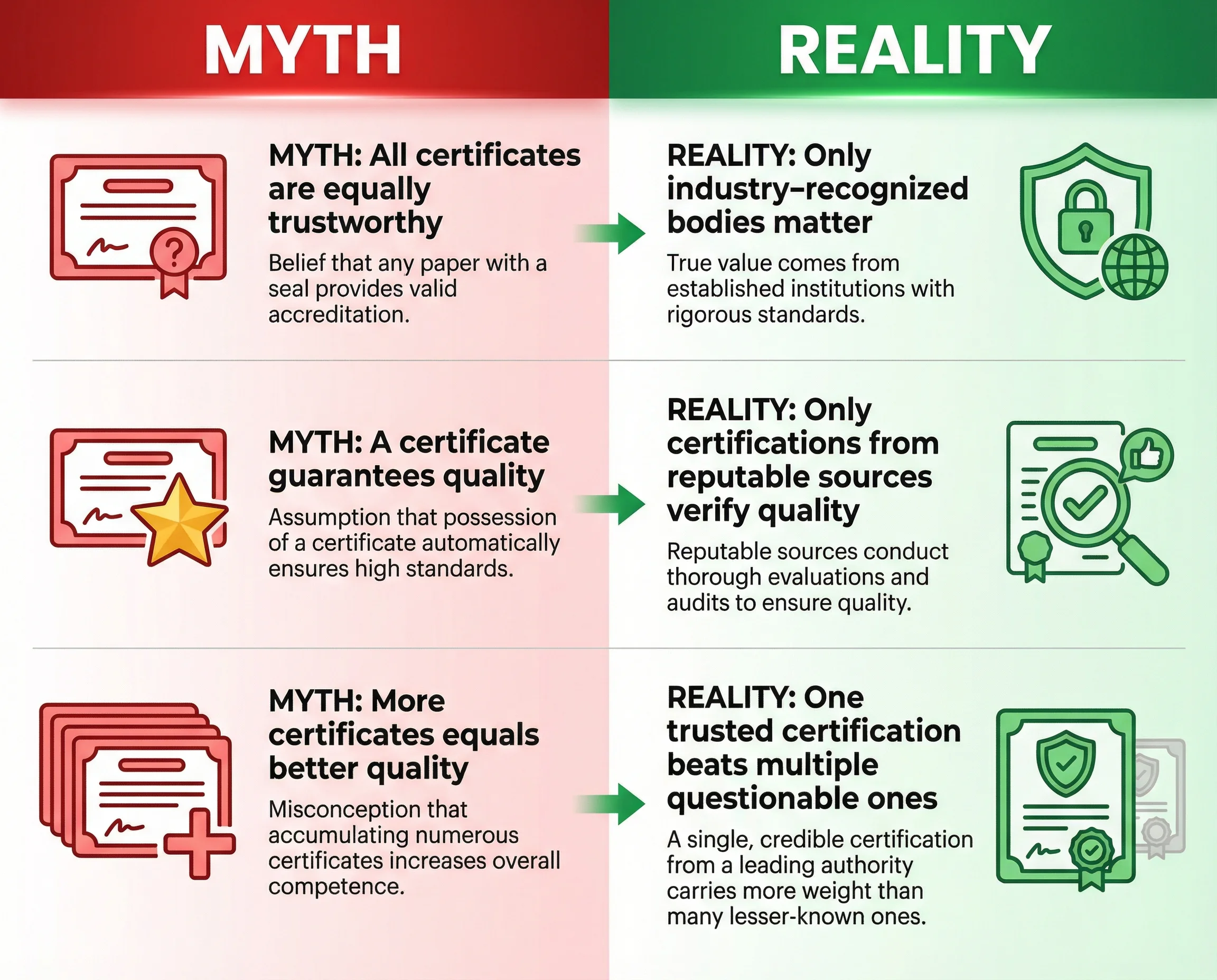
GRA stands for "Gemological Research Association," an organization that issues grading reports for moissanite and other gemstones. On the surface, these certificates appear professional—they include detailed measurements, color grades, clarity assessments, and even security features like holograms.
The problem? GRA is not recognized by the gemological industry as an authoritative certification body. Unlike established institutions such as GIA (Gemological Institute of America) or IGI (International Gemological Institute), GRA has no verifiable track record, no transparent grading standards, and no industry accreditation.
Why GRA Reports Create Confusion
GRA certificates are intentionally designed to resemble reports from trusted authorities. They use similar formatting, technical terminology, and even copy the layout styles of GIA reports. For buyers unfamiliar with gemological certifications, this makes GRA appear legitimate at first glance.
Industry Perspective: In our experience examining hundreds of moissanite stones, we've never seen a GRA certificate used by reputable jewelers. Trusted retailers exclusively rely on GIA, IGI, or provide detailed in-house documentation with transparent testing methods.
Why Industry Experts Question GRA Certifications
Lack of Industry Recognition
The gemological industry operates with established standards and recognized authorities. Organizations like GIA and IGI have:
- Decades of proven expertise in gemstone grading
- Transparent methodologies published and peer-reviewed
- Advanced equipment calibrated to industry standards
- Trained gemologists with verifiable credentials
- Global recognition by insurance companies, appraisers, and jewelers
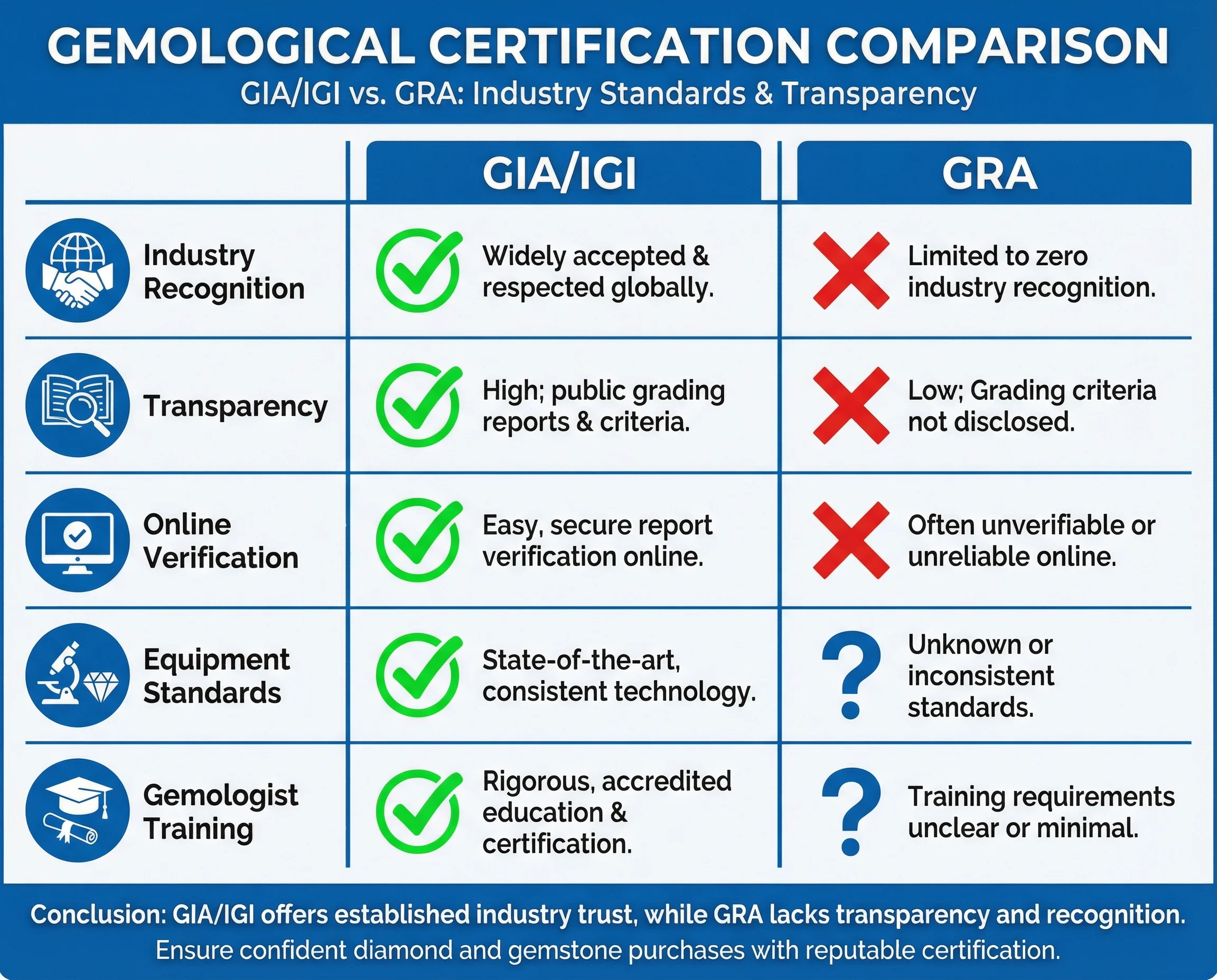
GRA has none of these qualifications. There are no published grading standards, no information about their testing equipment, and no transparency about who grades the stones or what qualifications they hold.
No Verifiable Standards or Transparency
When you receive a GIA or IGI report, you can verify it online through the organization's official database. You can research their grading methodology, understand their equipment, and even take courses to learn their standards yourself.
With GRA, there's no such transparency:
- No published grading methodology: How do they determine color grades? What equipment do they use? Unknown.
- No verification system: Most GRA reports cannot be independently verified online
- No organizational information: Who runs GRA? What are their credentials? Where are they located? These basic questions have no clear answers.
- Inconsistent reporting: GRA certificates often contain spelling errors, formatting inconsistencies, and conflicting information
Deceptive Formatting
One of the most concerning aspects of GRA certifications is their deliberate attempt to mimic trusted authorities. This includes:
- Using similar fonts and layouts to GIA reports
- Including technical jargon that sounds authoritative
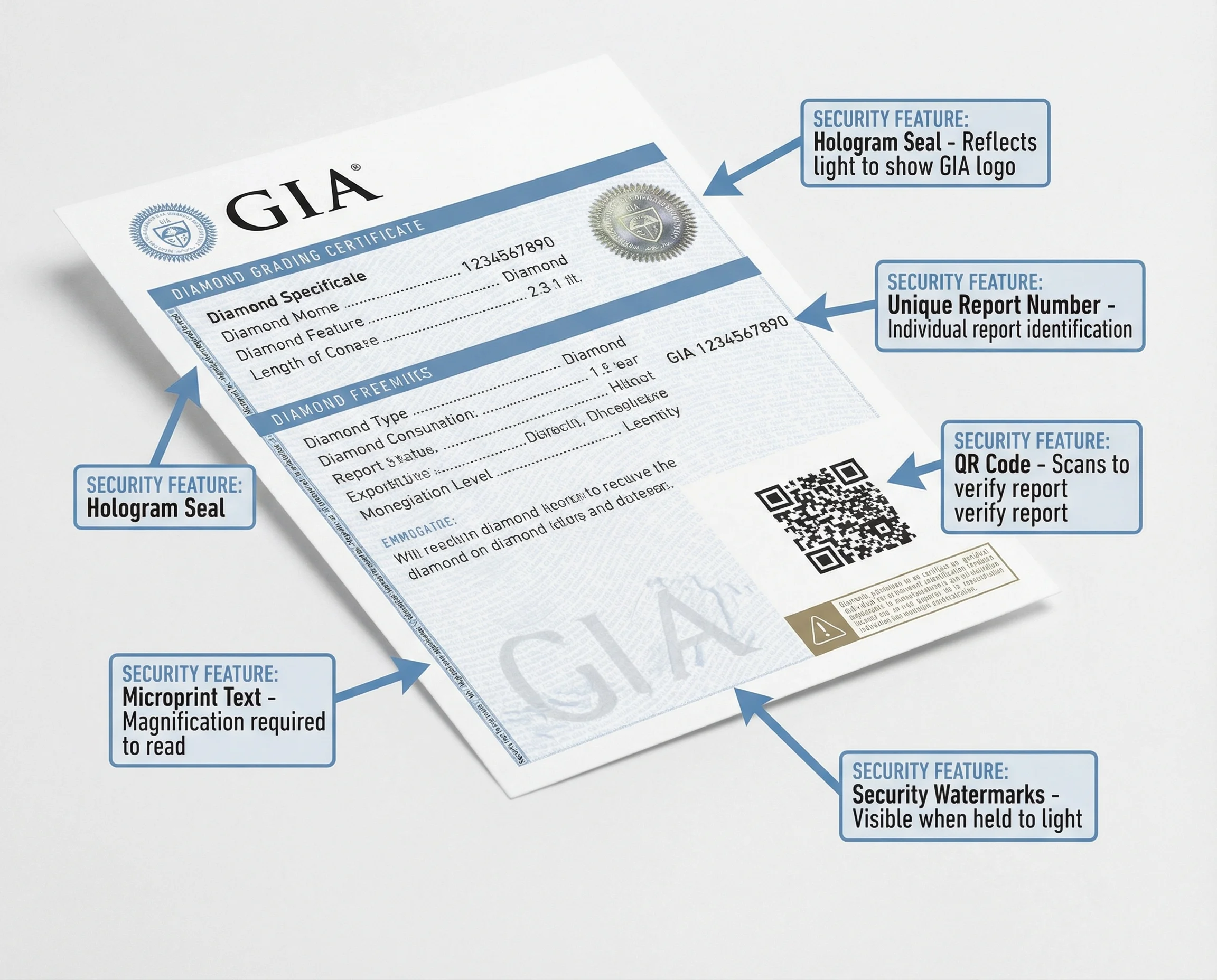
- Adding security features like holograms (which anyone can print)
- Using terms like "Certified" and "Guaranteed" without backing them up
This design is intentional—it's meant to give buyers false confidence without the rigorous testing that backs up legitimate certifications.
Red Flag Alert: If a certificate looks almost identical to a GIA report but isn't from GIA, that's a deliberate attempt to deceive, not a coincidence. Legitimate organizations create their own unique formats and don't need to copy others.
Association with Questionable Sellers
In our research and customer interactions, we've found that GRA certificates predominantly appear with:
- Ultra-low-priced moissanite on marketplaces (often suspiciously cheap)
- Sellers with limited information about their business or location
- Websites lacking security features (no HTTPS) or proper contact information
- Inconsistent product descriptions that don't match the certification claims
Reputable jewelers don't use GRA certifications because they add no credibility and may actually harm their reputation.
How GRA Compares to Trusted Certifications
GIA: The Gold Standard
The Gemological Institute of America (GIA) is the most respected authority in gemstone certification worldwide. Founded in 1931, GIA:
- Created the 4Cs grading system (Cut, Color, Clarity, Carat)
- Operates state-of-the-art laboratories globally
- Employs thousands of trained gemologists
- Provides education and research advancing gemological science
- Issues reports that insurance companies and appraisers universally trust
For moissanite specifically: While GIA primarily focuses on diamonds, their expertise and methodology set the standard that other reputable organizations follow.
IGI: Internationally Recognized
The International Gemological Institute (IGI), established in 1975, is another highly respected certification body:
- Operates laboratories in major cities worldwide
- Specializes in both diamonds and moissanite certification
- Uses advanced spectroscopic equipment for accurate identification
- Provides detailed reports with consistent, reliable grading
- Offers online verification for all certificates
For moissanite buyers: IGI is particularly valuable as they have extensive experience grading moissanite and provide detailed reports specifically designed for lab-created gemstones.
The Critical Differences
| Feature | GIA/IGI | GRA |
|---|---|---|
| Industry Recognition | Universally trusted | Not recognized |
| Transparency | Full methodology published | No published standards |
| Verification | Online verification available | Limited or no verification |
| Equipment | State-of-the-art, calibrated | Unknown/unverified |
| Gemologist Training | Rigorous, certified programs | Unknown credentials |
| Report Consistency | Highly consistent | Frequent errors/inconsistencies |
| Insurance Acceptance | Accepted worldwide | Generally not accepted |
Sparkile's Commitment: We source only high-quality moissanite from trusted suppliers and stand behind every piece with our satisfaction guarantee and return policy.
Real Risks of Relying on GRA Certifications
You May Not Get What You Paid For
The most significant risk is simple: a GRA certificate tells you nothing reliable about the moissanite's actual quality. The color grade, clarity rating, or other specifications on the certificate may not match the stone's real characteristics.
Real-world example: We've examined moissanite stones with GRA certificates claiming "D color" (colorless) that were actually in the J-K range (near colorless with noticeable tint). This represents a substantial difference in value and appearance.
Insurance and Appraisal Problems
If you need to insure your moissanite ring or get it appraised:
- Insurance companies typically don't accept GRA certifications as proof of value
- Professional appraisers will ignore GRA reports and conduct their own assessment
- Resale value may be affected if you can't provide legitimate documentation
This means you'll need to pay for a proper certification or appraisal anyway, making the GRA certificate completely worthless.
False Sense of Security
Perhaps the most insidious risk is psychological. A certificate—even a fake one—gives buyers confidence. You might:
- Skip proper verification assuming the certificate is accurate
- Pay more than the stone is worth based on inflated grades
- Recommend the seller to friends and family, spreading misinformation
- Miss obvious quality issues because you trust the "certified" claims
How to Protect Yourself When Buying Moissanite
Choose Reputable Retailers
The single most effective way to avoid questionable certifications is to buy from established, transparent jewelers:
Look for retailers who:
- Have verifiable business information (physical address, phone number, business registration)
- Offer detailed product descriptions with actual specifications
- Provide clear return policies and warranties
- Have extensive genuine customer reviews
- Are transparent about their sourcing and quality control
At Sparkile, we believe transparency builds trust. We source high-quality moissanite from trusted suppliers and back every purchase with our satisfaction guarantee.
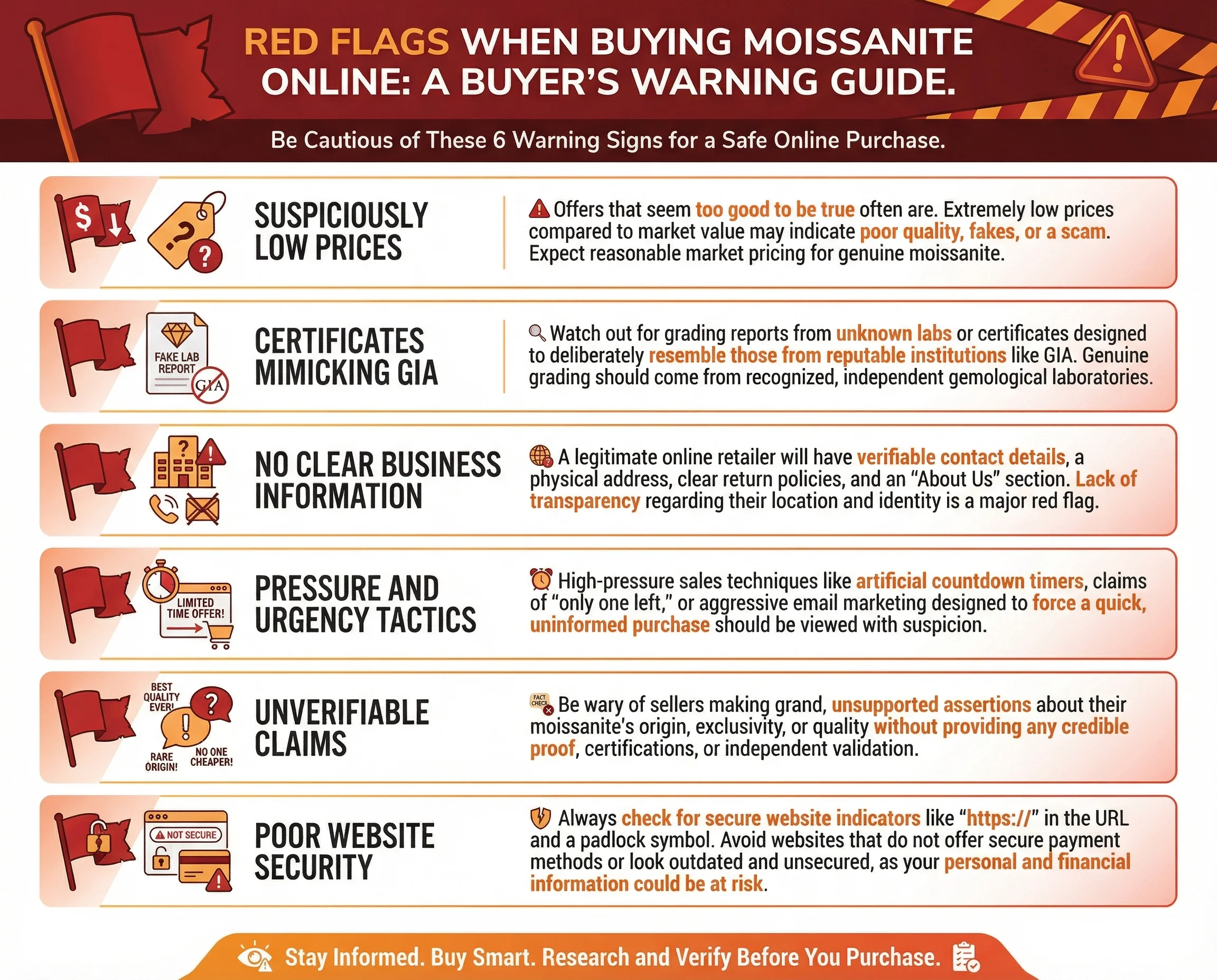
Know the Red Flags
Watch for these warning signs when shopping:
✗ Suspiciously low prices: Quality moissanite has real costs. If it's dramatically cheaper than competitors, question why.
✗ Certificates that mimic GIA: Any certificate trying to look like GIA but isn't from GIA is a red flag.
✗ Vague seller information: No clear business address, contact info, or company background.
✗ Pressure tactics: "Limited time only" or "last one available" urgency without substance.
✗ Unverifiable claims: Certifications you can't verify online or through independent sources.
✗ Poor website security: No HTTPS, broken links, or unprofessional design.
Verify Everything
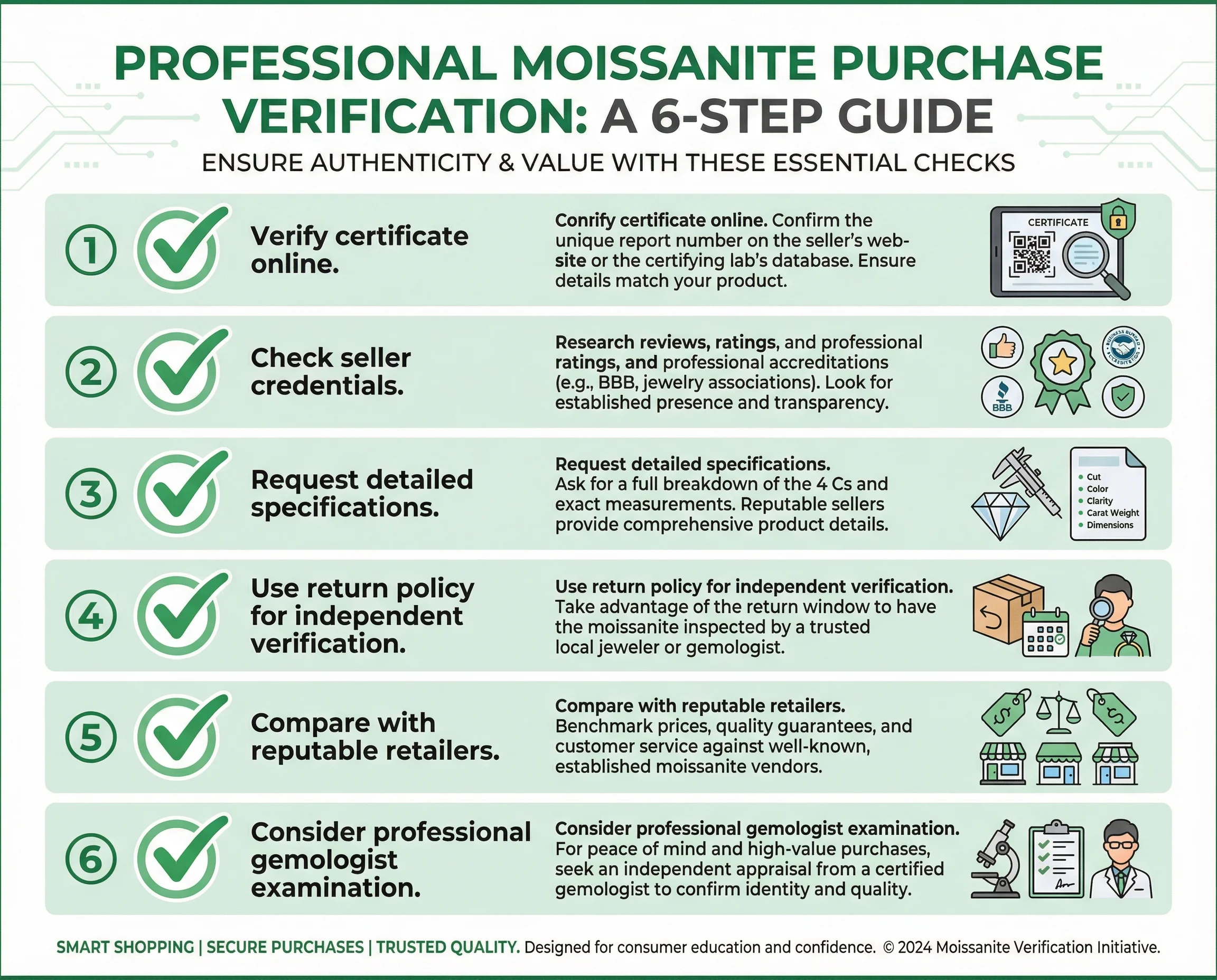
Even with a certificate from a known organization, take these steps:
-
Verify the certificate online: GIA and IGI offer free online verification. Look up the certificate number on their official websites.
-
Check the seller's credentials: Research the company. Look for BBB ratings, independent reviews (not just on their site), and industry affiliations.
-
Request detailed specifications: Ask for specific measurements, refractive index, and other technical details.
-
Use a return policy: Reputable sellers offer money-back guarantees. Take advantage of this to get the stone independently verified.
Pro Tip: If purchasing a moissanite ring for an important occasion like an engagement, consider having it examined by a local independent gemologist. The small fee (usually $50-100) provides peace of mind and ensures you got what you paid for.
Alternative Verification Methods
If you already purchased moissanite with a GRA certificate, you can still verify quality:
Diamond/Moissanite Tester: Widely available for $20-50, these devices can confirm whether a stone is moissanite (versus CZ or glass). However, they can't verify quality grades.
Professional Gemologist: A certified gemologist can examine your stone using proper equipment and provide an accurate assessment of color, clarity, and cut quality. This is the most reliable verification method.
Comparison Shopping: Compare your stone side-by-side with moissanite from reputable retailers. Differences in sparkle, color, and clarity will be apparent.
What to Do If You Have a GRA Certificate
Don't Panic
First, understand that having a GRA certificate doesn't necessarily mean your moissanite is fake or low-quality. Many sellers use GRA certificates simply because they're cheap and make the product appear more professional. Your stone might still be genuine moissanite.
Verify the Stone Independently
Take these steps to determine your moissanite's real quality:
- Use a moissanite tester: Confirm it's actually moissanite and not a different material
- Visit a local jeweler: Many will provide a quick assessment for free or a small fee
- Get a professional appraisal: For expensive pieces, invest in a proper appraisal from a certified gemologist
Consider Your Options
Based on what you discover:
If the stone matches your expectations: Keep it and enjoy it! The questionable certificate doesn't diminish the beauty of genuine moissanite.
If the stone is lower quality than claimed: Contact the seller to request a refund or exchange. Document everything (photos, correspondence, appraisal results). Many marketplaces offer buyer protection programs.
If the seller refuses to cooperate: Dispute the charge through your credit card company or the marketplace's resolution center. GRA certificates claiming specific grades that the stone doesn't meet can support fraud claims.
Important: Act quickly. Most return periods and dispute windows are time-limited (typically 30-90 days). Don't wait months before verifying your purchase.
Future Purchases
Learn from the experience:
- Research sellers thoroughly before buying
- Don't trust certifications from unknown organizations
- Understand that legitimate quality comes with transparent documentation
- Choose retailers with strong reputations and clear return policies
Understanding Moissanite Quality Without Certificates
What Actually Matters
Regardless of certifications, here's what determines moissanite quality:
Color: High-quality moissanite ranges from colorless (D-F) to near-colorless (G-I). Lower grades show noticeable yellow or gray tints.
Clarity: Most quality moissanite is eye-clean, meaning no visible inclusions. Internal characteristics should only be visible under 10x magnification.
Cut: Precision cutting maximizes moissanite's exceptional brilliance and fire. Poor cuts diminish sparkle significantly.
Polish and Symmetry: These affect how light interacts with the stone, impacting overall appearance.
How to Assess Quality Yourself
When examining moissanite:
Visual Inspection:
- View the stone in natural daylight and various lighting conditions
- Check for visible inclusions or color tints
- Observe the sparkle and fire (rainbow flashes)
- Look at it from multiple angles
Comparison:
- Compare with certified stones if possible
- Look at examples from reputable retailers
- Understand what different quality grades actually look like
Ask Questions:
- Request specific technical details from the seller
- Ask about their quality control process
- Inquire about their sourcing and manufacturing
Sparkile's Approach: We source our moissanite from trusted suppliers who maintain strict quality standards. Every purchase is backed by our satisfaction guarantee—if you're not happy with your ring, we'll make it right.
The Bigger Picture: Why This Matters
Protecting the Industry's Reputation
Questionable certifications harm everyone in the moissanite industry:
- Legitimate sellers face unfair competition from those using fake certificates to justify higher prices
- Consumers lose trust in moissanite as a product category
- The industry struggles with credibility when scams proliferate
By choosing transparent retailers and demanding accountability, you help build a healthier marketplace.
Your Role as an Informed Buyer
Every purchase you make is a vote for certain business practices. When you:
- Choose transparent sellers: You reward honesty and quality
- Demand verification: You raise standards across the industry
- Share your experiences: You help other buyers make informed decisions
- Report fraud: You protect future customers from scams
Your purchasing decisions have power. Use that power to support retailers who prioritize your interests over quick profits.
Frequently Asked Questions
Is all moissanite with GRA certificates fake?
Not necessarily. The moissanite itself may be genuine—GRA certificates just don't reliably verify its quality. The stone could be real moissanite, but the certification claims about color, clarity, etc. are unreliable.
Why do sellers use GRA certificates if they're not trusted?
GRA certificates are cheap and easy to obtain. They make products appear more professional and "certified" to uninformed buyers, allowing sellers to charge higher prices or compete with legitimate jewelers.
Can I trust other unknown certifications?
Apply the same scrutiny to any certification: Can you verify it independently? Is the organization transparent about their methodology? Are they recognized by industry professionals? If not, be cautious.
What certifications should I look for?
For moissanite, look for:
- IGI (International Gemological Institute) - specifically experienced with moissanite
- GIA reports for diamonds (sets industry standards)
- Transparent in-house testing from reputable retailers with detailed specifications
Does Sparkile provide certificates?
We don't provide third-party certificates, which is standard for moissanite jewelry. Instead, we focus on sourcing high-quality stones from trusted suppliers and backing every purchase with our satisfaction guarantee. If you need documentation for insurance, we recommend getting an appraisal from a local certified gemologist.
Conclusion: Buy Smart, Buy Confident
Moissanite is a beautiful, durable, and ethical alternative to diamonds—when you buy from the right sources. Questionable certifications like those from GRA don't reflect on moissanite's inherent quality; they reflect on sellers trying to cut corners or deceive buyers.
Your key takeaways:
- GRA certifications are not recognized by gemological industry authorities
- Stick with trusted sources: GIA and IGI for independent certification, or transparent retailers with detailed in-house testing
- Verify everything: Don't take claims at face value, especially with expensive purchases
- Watch for red flags: Suspiciously low prices, certificates mimicking GIA, and vague seller information
- Know your rights: Use return policies and buyer protection programs if something isn't as described
The good news? High-quality moissanite from reputable sellers offers exceptional value, stunning beauty, and ethical peace of mind. You just need to know what to look for.
Ready to explore moissanite jewelry from a transparent, customer-first retailer? Browse our collection of certified high-quality moissanite rings, backed by our lifetime warranty and satisfaction guarantee.
References and Further Reading:
- GIA Gemological Research - Industry-standard gemological education and certification
- IGI Official Website - International gemological certification authority
- Understanding Moissanite Quality - Complete comparison guide
Related Articles
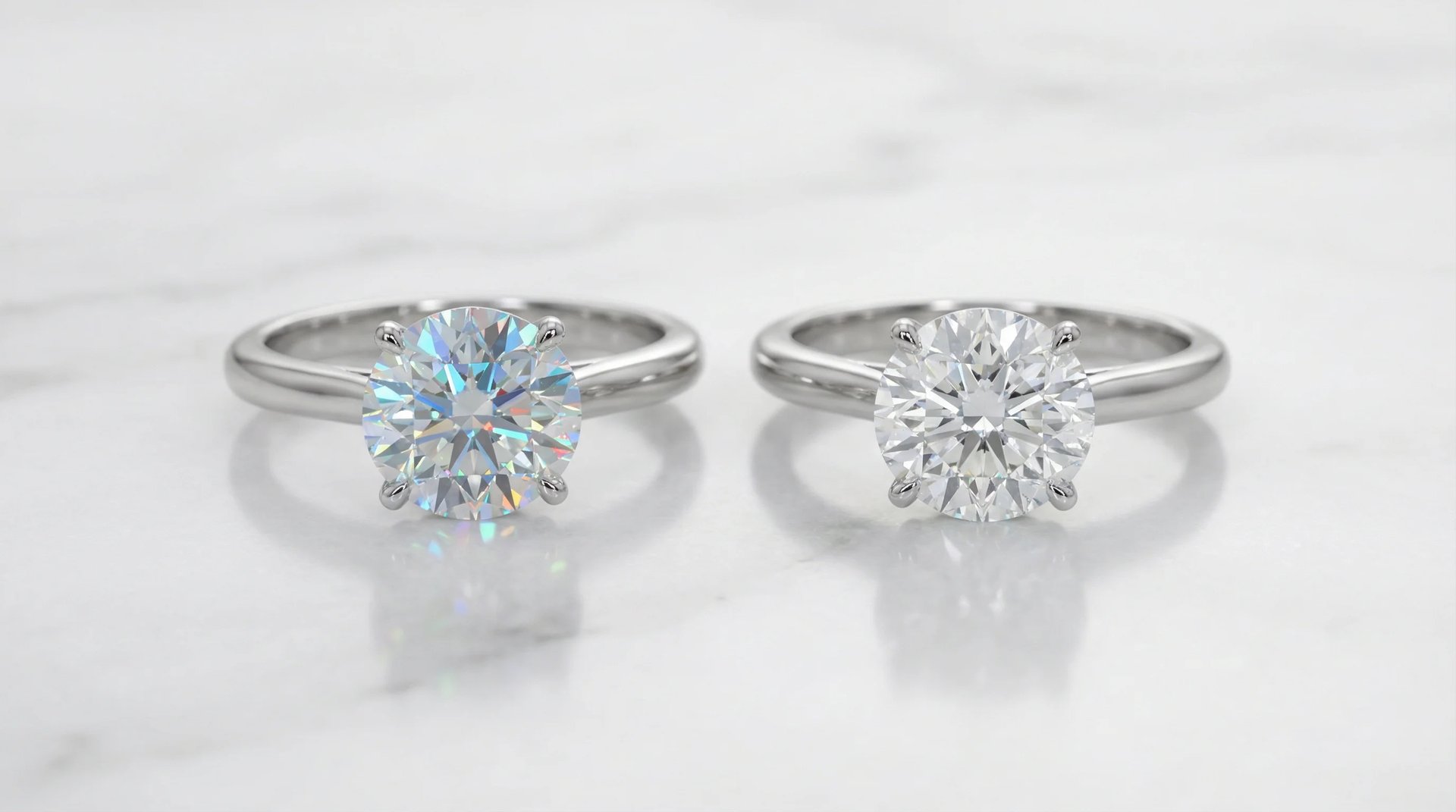
Moissanite vs Lab-Grown Diamond: Which Is Better Value in 2026?
Compare moissanite and lab-grown diamonds side by side. See the real price differences, visual comparisons, and which gemstone offers the best value for your budget.
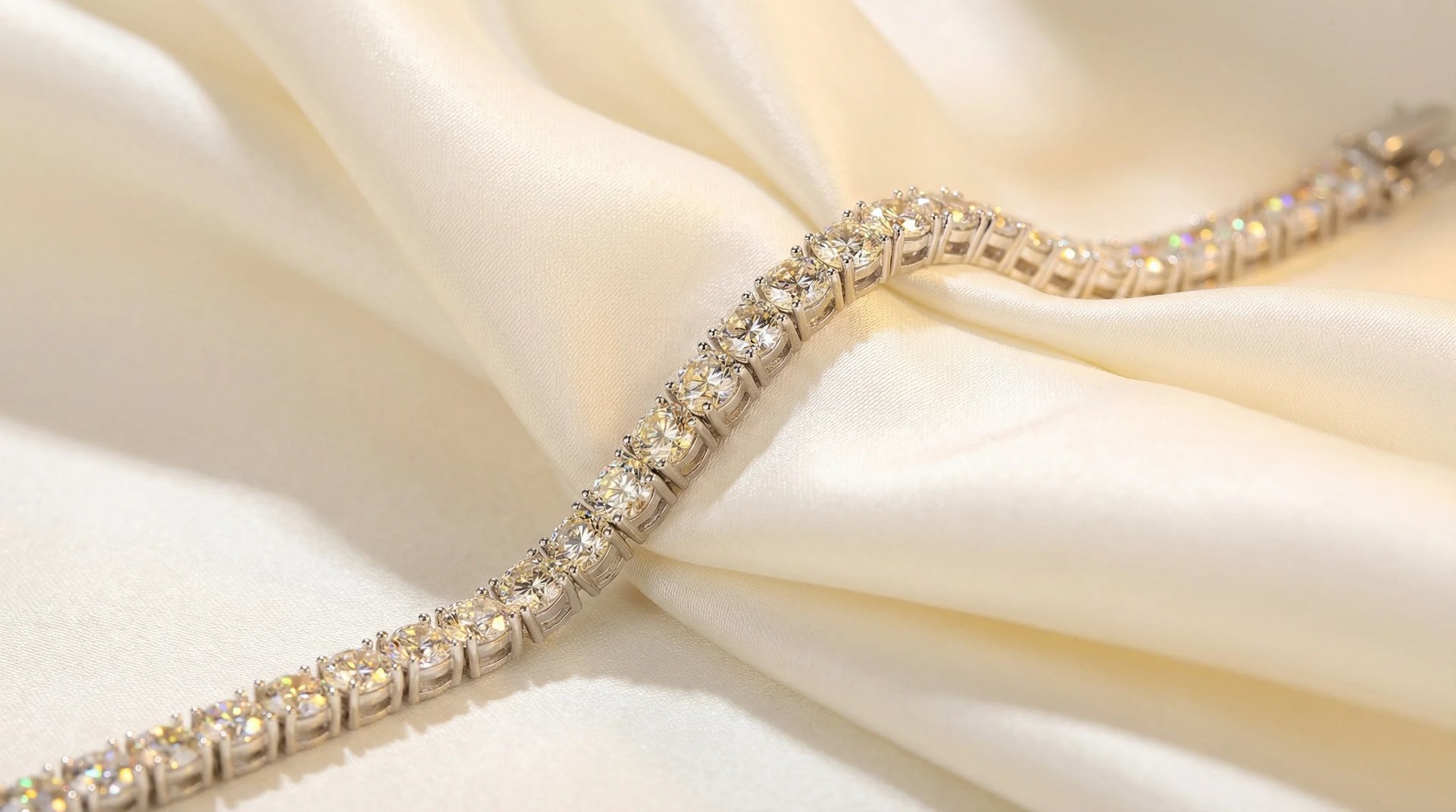
Moissanite Tennis Bracelets & Chains: The Complete Buying Guide
Everything you need to know about moissanite tennis bracelets and chains. Compare sizes, metals, and styles to find your perfect piece.
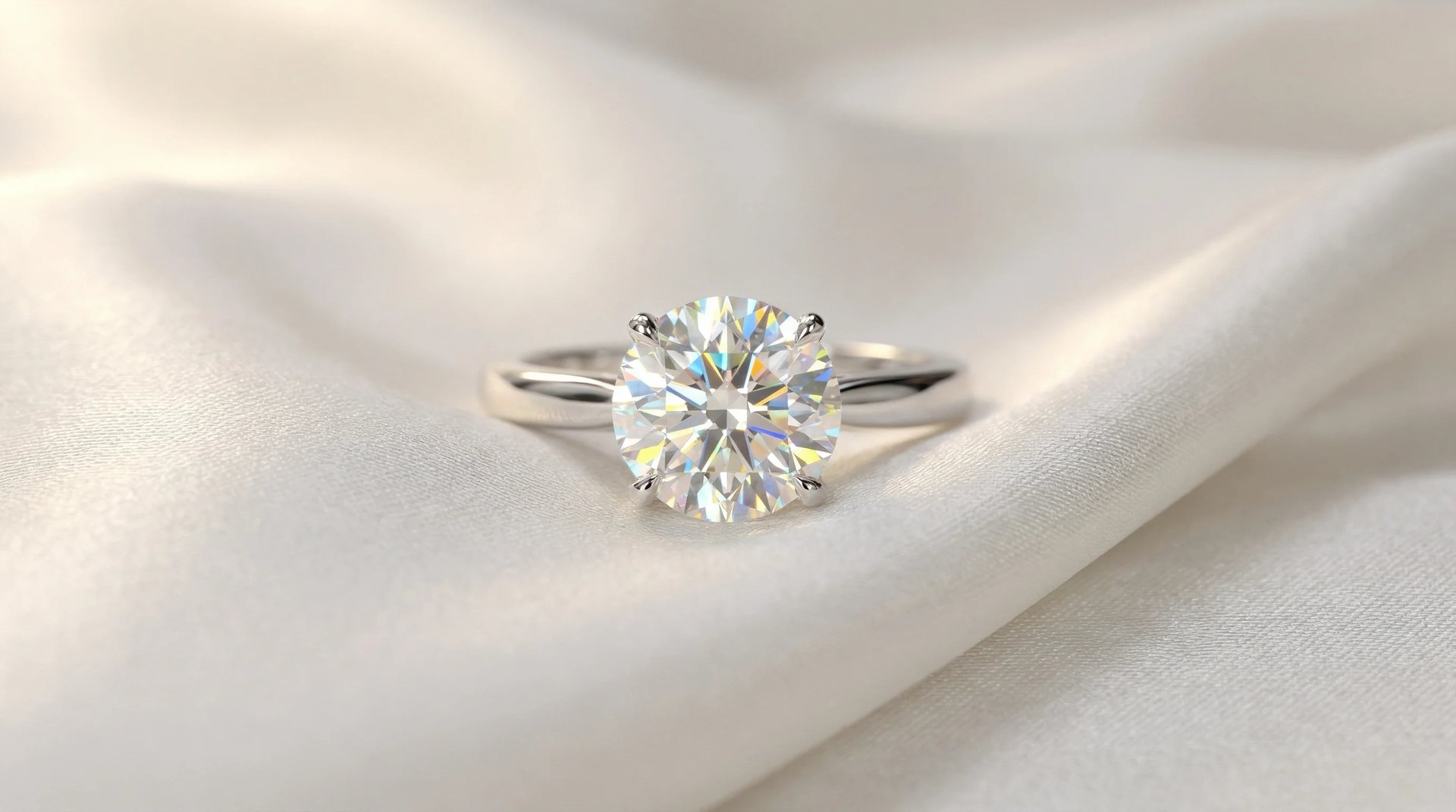
Does Moissanite Get Cloudy? Durability Myths Debunked (2026)
Worried about moissanite cloudiness? We debunk the top durability myths with scientific evidence. Learn why moissanite won't fade, scratch, or tarnish.