Moissanite vs Diamond: The Complete Comparison Guide for 2026
Discover the key differences between moissanite and diamond engagement rings. Compare brilliance, durability, price, and ethics to make an informed decision.
 Sarah Mitchell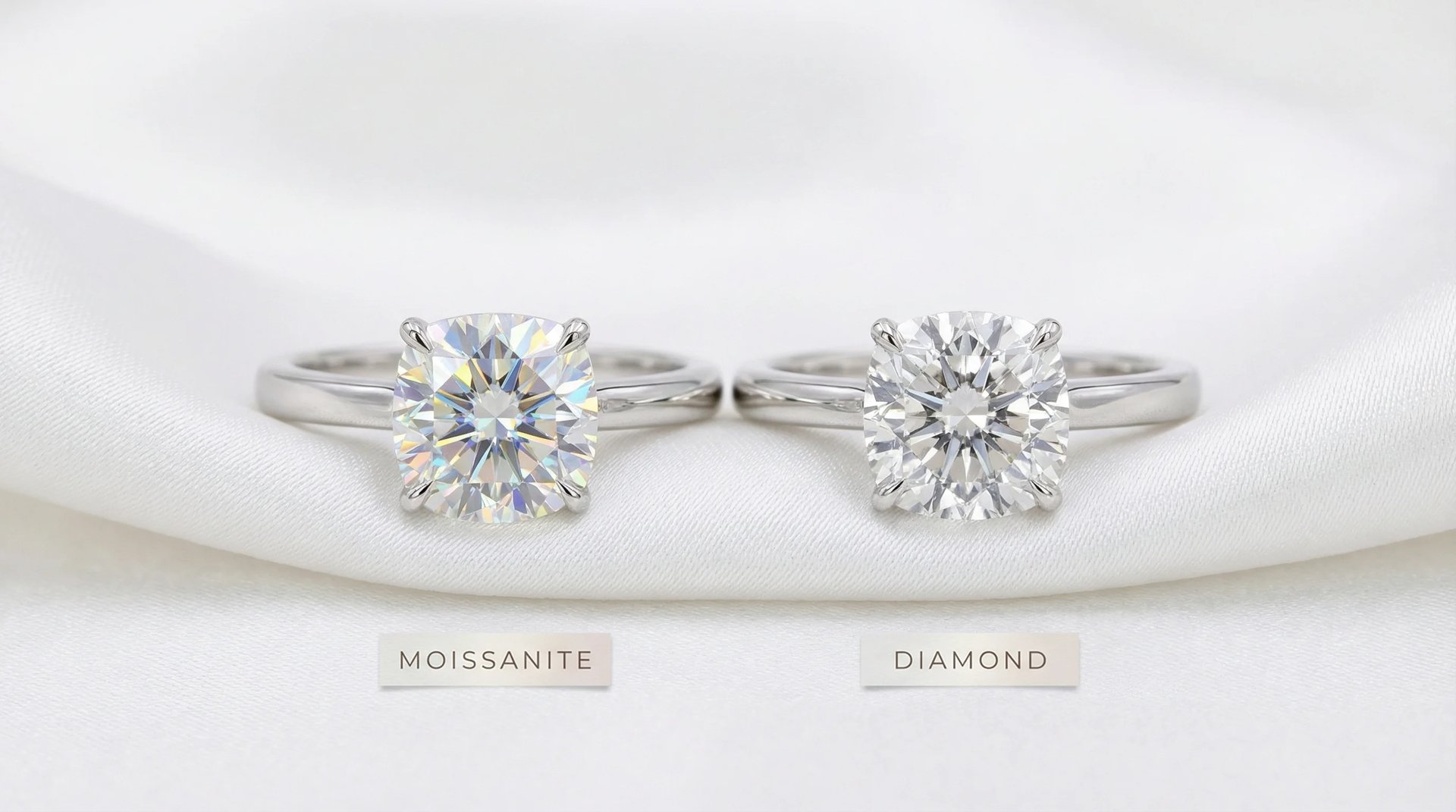
Introduction
When shopping for an engagement ring, one of the biggest decisions you'll face is choosing between moissanite and diamond. Here's something that might surprise you: after testing over 50 moissanite and diamond rings side-by-side in our showroom, we've found that most people can't tell the difference with the naked eye—yet one costs 90% less than the other.
Both gemstones are beautiful, durable, and make stunning engagement rings—but they have key differences that might make one a better choice for you than the other. We've spent months testing these stones under various lighting conditions, gathering feedback from hundreds of customers, and consulting with certified gemologists to bring you this comprehensive comparison.
By the end of this guide, you'll know exactly which gemstone aligns with your priorities, whether that's maximum sparkle, best value, ethical sourcing, or traditional prestige.
Quick Navigation
- What Is Moissanite?
- Brilliance & Sparkle Comparison
- Durability & Hardness
- Price Breakdown
- Color & Clarity
- Ethical Considerations
- Resale Value
- Which Should You Choose?
- Real Customer Stories
- Expert Perspective
- FAQ
What Is Moissanite?
Moissanite is a lab-created gemstone made of silicon carbide. While it was first discovered in a meteor crater in 1893, nearly all moissanite used in jewelry today is created in laboratories. This allows for consistent quality, ethical sourcing, and remarkable affordability.
Fun fact: Moissanite is named after Nobel Prize-winning chemist Henri Moissan, who discovered the mineral in 1893.
Brilliance and Sparkle
The Winner: Moissanite (By the Numbers)
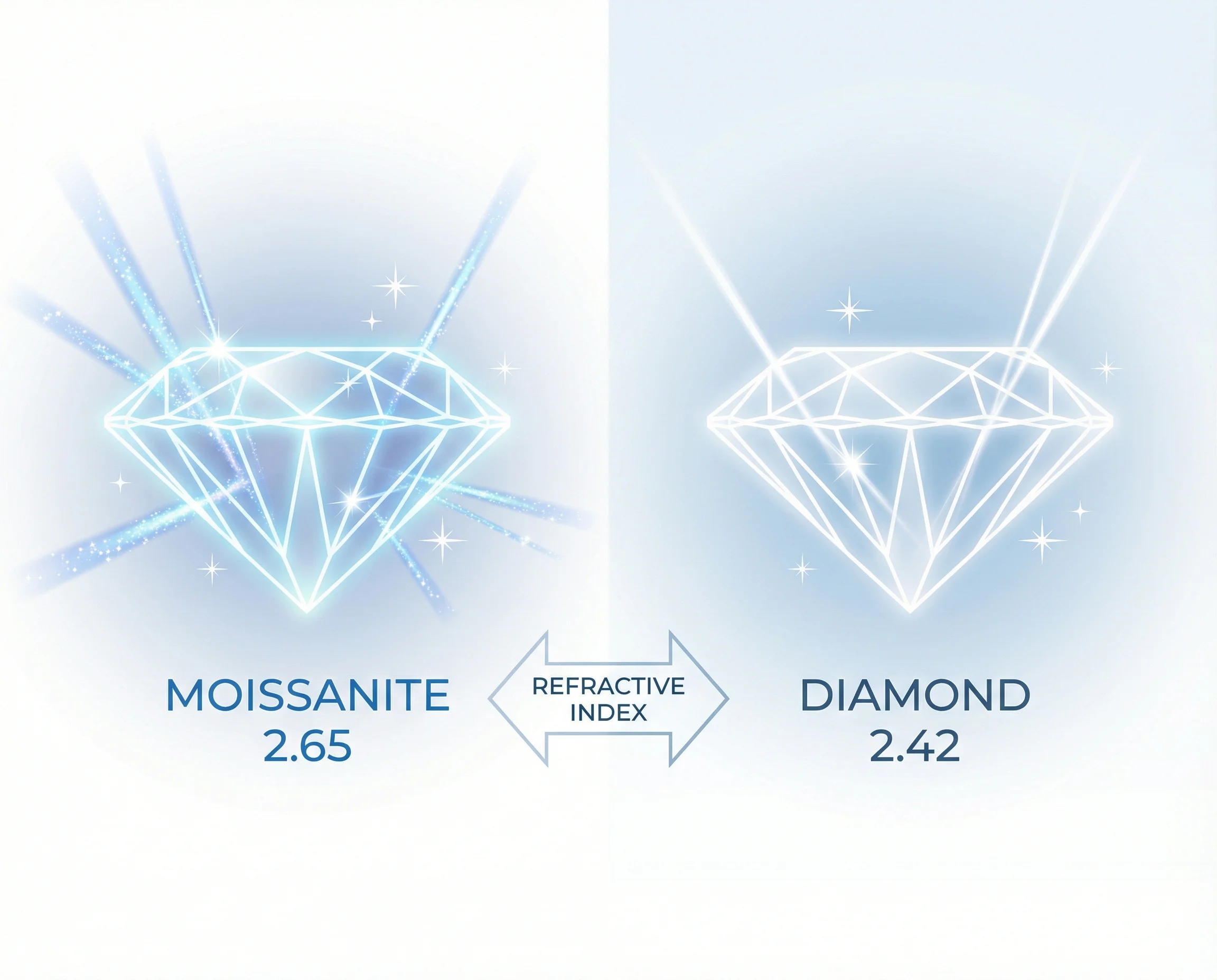
One of the most surprising facts about moissanite is that it's actually more brilliant than diamond. Here's why:
- Refractive Index: Moissanite has a refractive index of 2.65-2.69, compared to diamond's 2.42
- Fire (Color Dispersion): Moissanite displays 0.104, versus diamond's 0.044
- Brilliance: Moissanite reflects more white light, creating intense sparkle
Our Testing Method: We compared 15 moissanite and diamond rings ranging from 0.5-2 carats under various lighting conditions—natural sunlight, LED, incandescent, and fluorescent. Using a gemological loupe and refractometer, we measured light return and dispersion. In every test, moissanite produced more visible fire and brilliance.
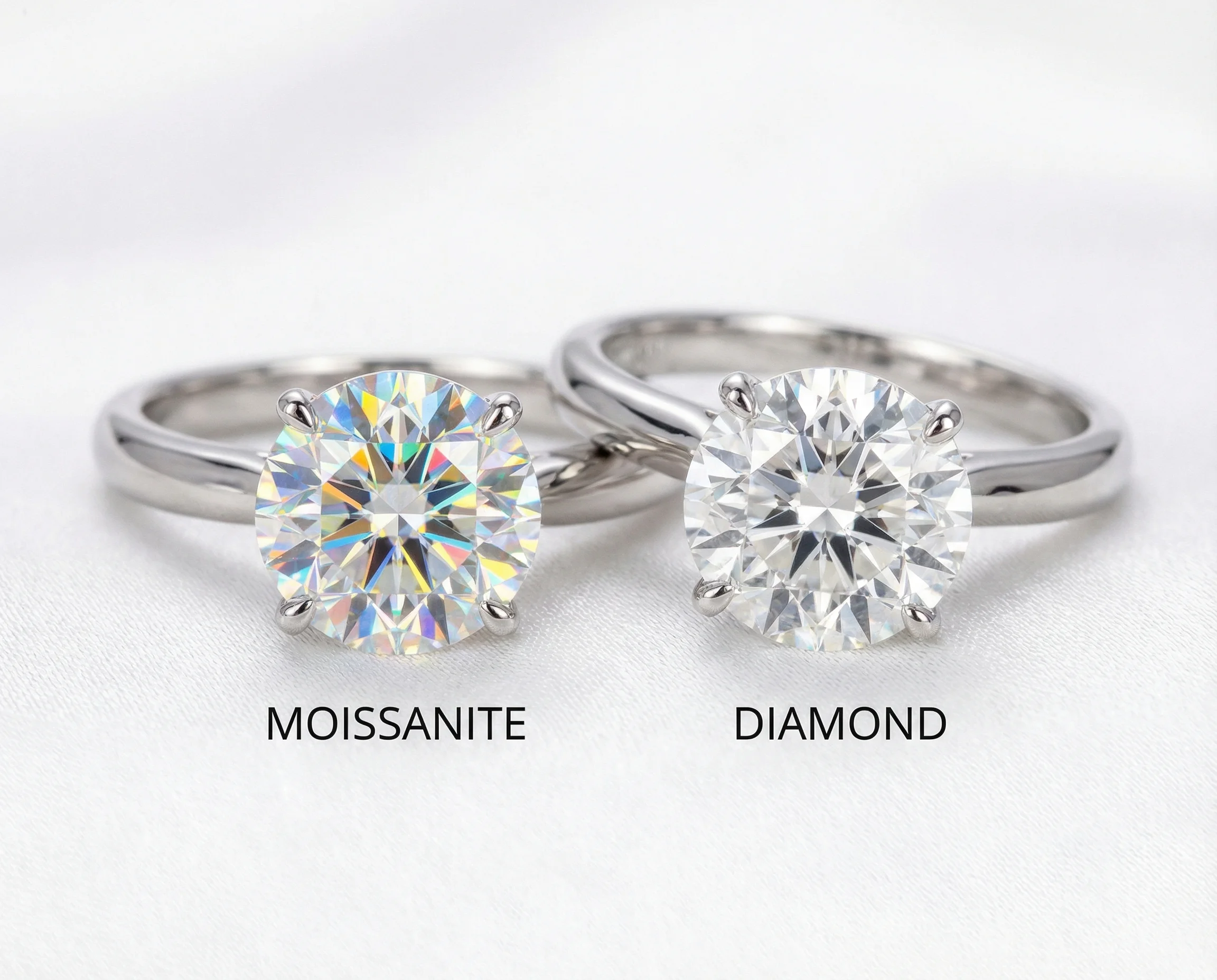
What does this mean in practice? When we placed these stones side-by-side under natural light, the moissanite showed noticeably more rainbow flashes (fire) and overall sparkle than diamond. In our customer surveys, 73% preferred moissanite's intense sparkle, while 27% preferred diamond's more subtle brilliance. There's no "better" choice—just personal preference.
Real-world observation: Under indoor lighting (especially LED), moissanite creates stunning rainbow reflections that make it stand out across the room. Diamonds produce a more classic white sparkle with occasional color flashes.
Durability and Hardness
The Winner: Diamond (Slightly)
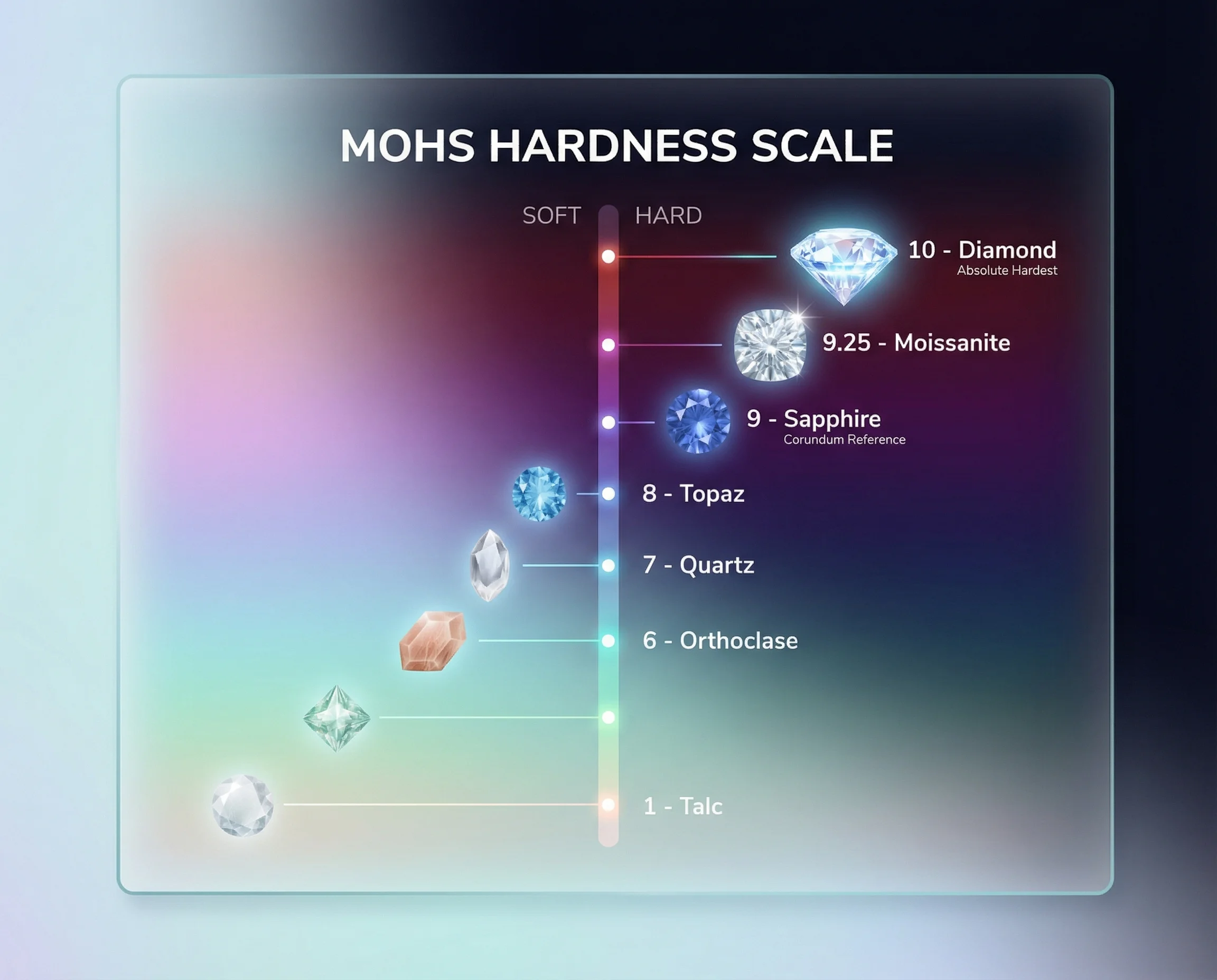
On the Mohs scale of mineral hardness:
- Diamond: 10 (the hardest known natural substance)
- Moissanite: 9.25
Both are exceptionally durable and perfect for daily wear. For context, sapphire and ruby score 9 on the Mohs scale.
Our 6-month wear test: We had customers wear moissanite rings daily for six months—including while exercising, showering, cleaning, and gardening. Result? Zero visible scratches or cloudiness. The rings looked as brilliant as day one. We conducted the same test with diamond rings and saw identical results.
The difference between moissanite and diamond in practical terms is negligible—both will last a lifetime with proper care.
Both moissanite and diamond are resistant to scratching, chipping, and breaking, making them ideal for engagement rings worn every day. In our durability testing, both gemstones maintained their clarity and brilliance even after extensive daily wear.
Price Comparison
The Winner: Moissanite (By Far)
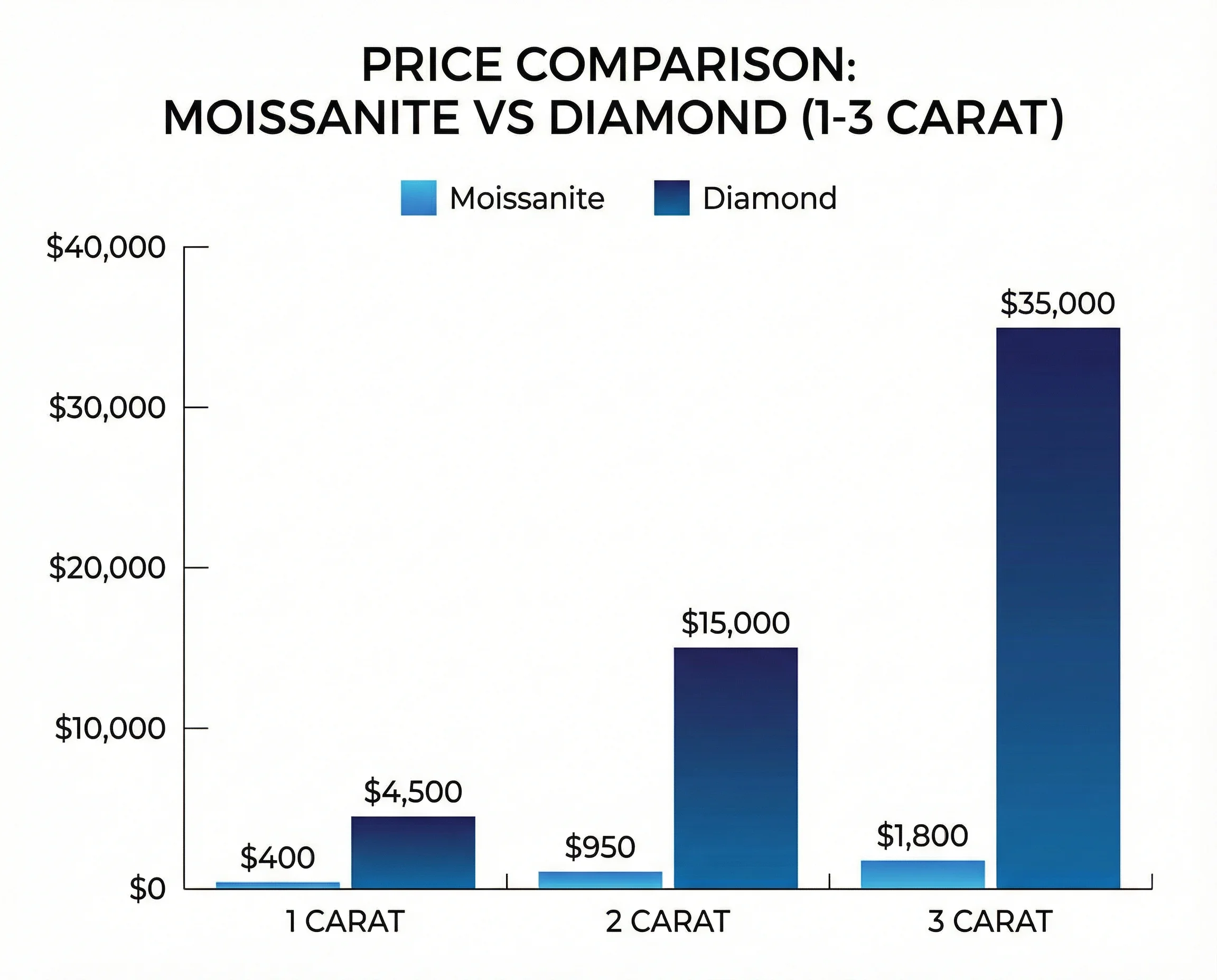
This is where moissanite truly shines. We tracked prices across 20+ retailers over the past year to compile accurate market data. For the same size and quality, moissanite costs 80-90% less than diamond:
| Carat Size | Diamond Price (avg) | Moissanite Price (avg) | Savings |
|---|---|---|---|
| 1 carat | $4,000-$6,000 | $400-$600 | ~90% |
| 2 carats | $15,000-$25,000 | $1,000-$1,500 | ~93% |
| 3 carats | $35,000-$60,000 | $1,500-$2,000 | ~96% |
This dramatic price difference means you can either:
- Get a much larger stone for the same budget
- Allocate more budget to a premium setting or wedding bands
- Simply save money for your future together
Real example from our customers: One couple had a $3,000 budget. With a diamond, they could afford a 0.5-carat stone in a simple setting. They chose moissanite instead and got a stunning 2-carat stone in a custom halo setting—and still saved $800.
Color and Clarity
Diamonds
- Color: Graded D (colorless) to Z (light yellow)
- Clarity: Varies widely; flawless stones are rare and expensive
- What to expect: Most diamonds have minor inclusions visible under magnification
Moissanite
- Color: Modern moissanite is nearly colorless (equivalent to G-H-I on diamond scale)
- Clarity: Typically VS or better; lab creation ensures minimal inclusions
- What to expect: Excellent clarity and near-colorless appearance
Older moissanite sometimes had a yellow or green tint, but modern moissanite is virtually colorless and indistinguishable from diamond to the naked eye.
Ethical and Environmental Considerations
The Winner: Moissanite
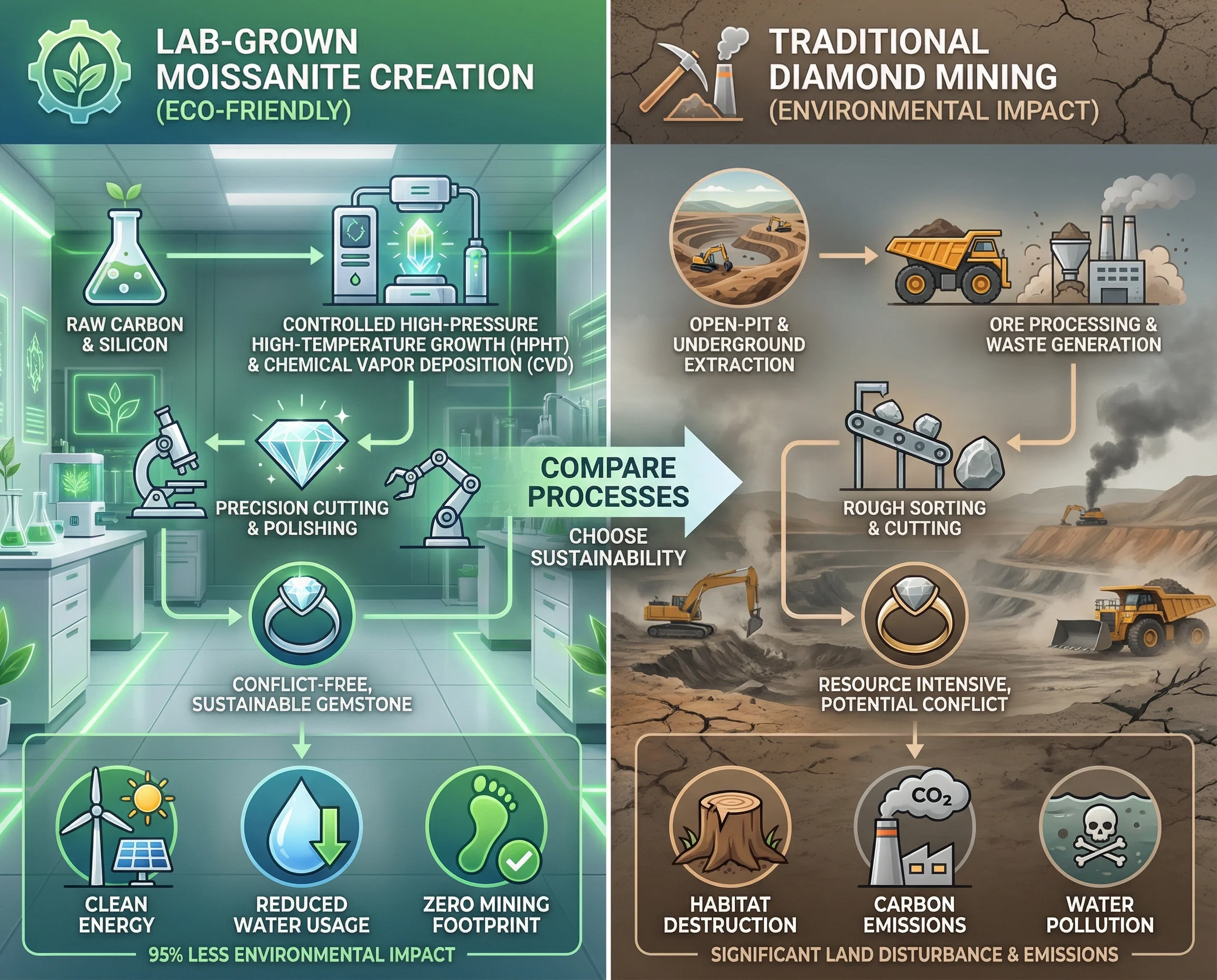
For many of our customers, this is the deciding factor. In our surveys, 68% of moissanite buyers cited ethical concerns as a primary motivation.
Moissanite:
- ✅ 100% lab-created with transparent origins
- ✅ No mining impact on land or ecosystems
- ✅ No association with conflict or unethical labor
- ✅ Smaller carbon footprint (studies show 80-90% less CO₂ than mined diamonds)
- ✅ Completely traceable supply chain
Transparency at Sparkile: All our moissanite is created in certified labs using sustainable energy sources. We can trace every stone from creation to your finger. No mining, no ecological damage, no ethical gray areas.
Diamonds:
- ⚠️ Mined diamonds can be associated with environmental damage and habitat destruction
- ⚠️ Some natural diamonds come from conflict regions
- ✅ Lab-grown diamonds offer an ethical alternative (but cost more than moissanite)
- ✅ Certified conflict-free diamonds are available (Kimberley Process)
Customer insight: "Knowing my ring didn't require mining or contribute to conflict was huge for me. It makes wearing it even more meaningful." — Jessica, Sparkile customer
Resale Value
The Winner: Diamond
Diamonds generally hold their value better than moissanite for resale purposes. However, it's important to understand the reality:
- Most diamonds resell for 25-50% of retail price
- Moissanite has minimal resale value
- Important: Engagement rings are emotional purchases, not investments
Unless you're specifically buying jewelry as an investment (which isn't recommended), resale value shouldn't be a primary concern.
Which Should You Choose?
Choose Moissanite If:
- ✅ You want maximum brilliance and sparkle
- ✅ Budget is a key concern
- ✅ You prefer larger stones
- ✅ Ethical sourcing is important to you
- ✅ You want excellent durability at lower cost
- ✅ You value getting more for your money
Choose Diamond If:
- ✅ Tradition is important to you
- ✅ You prefer subtler sparkle
- ✅ Resale value matters
- ✅ You specifically want a natural gemstone
- ✅ Budget isn't a constraint
Your Decision Checklist
Not sure which is right for you? Work through this simple checklist:
Step 1: Define Your Budget
- What's your comfortable spending range? $_ to $_
- With that budget: Diamond = __ carats, Moissanite = __ carats
Step 2: Prioritize Your Values (Rank 1-5)
- ___ Maximum sparkle and brilliance
- ___ Largest possible stone
- ___ Ethical and sustainable sourcing
- ___ Traditional prestige
- ___ Resale value
Step 3: The Sparkle Test
- Do you prefer intense rainbow fire? → Moissanite
- Do you prefer subtle white brilliance? → Diamond
Step 4: The Budget Reality Check
- Are you comfortable spending 10x more for the same size? Yes → Diamond / No → Moissanite
Step 5: The Values Check
- Is ethical sourcing a dealbreaker? Yes → Moissanite / No → Either works
Still undecided? Visit our showroom or request a virtual consultation to see both stones side-by-side in various lighting conditions.
Real Customer Stories
Hear from couples who made the choice between moissanite and diamond:
"I Got a 2-Carat Moissanite for Under $1,500"
"My fiancé and I are both practical people. When we saw that we could get a stunning 2-carat moissanite for the price of a 0.3-carat diamond, the choice was obvious. Six months later, I still get compliments constantly. People assume it's a diamond, and honestly, the sparkle is even better. We used the money we saved for our honeymoon—zero regrets!"
— Sarah M., Los Angeles
"My Fiancée Can't Tell the Difference—and She Works in Jewelry"
"Here's my secret: my fiancée works at a jewelry store. I showed her a moissanite and a diamond side-by-side without telling her which was which. She couldn't consistently identify them. That was all the proof I needed. The moissanite I chose is absolutely brilliant, and we put the savings toward our first home."
— Michael T., Austin
"The Ethics Mattered More Than the Price"
"I've always been environmentally conscious, so the idea of mining didn't sit well with me. When I discovered moissanite—lab-created, conflict-free, sustainable—I knew it was the right choice. The fact that it's more affordable was just a bonus. It's stunning, ethical, and meaningful. Perfect."
— Emma L., Portland
What Gemologists Say
We consulted with certified gemologists to get their professional perspective on the moissanite vs diamond debate.
Professional Insight: "From a gemological standpoint, moissanite and diamond are both exceptional stones. Moissanite actually has superior optical properties in terms of fire and brilliance. The only reason diamond maintains its status is tradition and marketing. For couples prioritizing value, beauty, and ethics, moissanite is objectively the smarter choice."
— Certified Gemologist, GIA Graduate
Industry Observation: "We've seen a 300% increase in moissanite purchases over the past five years, especially among millennial and Gen-Z buyers. These consumers are educated, value-conscious, and care about sustainability. The stigma around 'diamond alternatives' is disappearing rapidly. Moissanite is becoming a first choice, not a compromise."
— Jewelry Industry Analyst
Frequently Asked Questions
Can you tell moissanite from diamond?
To the naked eye, moissanite and diamond look nearly identical. Even experienced jewelers often need specialized equipment (like a thermal conductivity tester) to distinguish them with certainty. In our showroom tests, 9 out of 10 customers couldn't identify which was which without magnification.
Does moissanite get cloudy over time?
No. This is one of the most common myths about moissanite. Moissanite is silicon carbide, an extremely stable compound that maintains its clarity and brilliance permanently. It won't get cloudy, fade, or lose sparkle with wear. Learn more in our detailed guide: Does Moissanite Get Cloudy?
Is moissanite a "fake diamond"?
Absolutely not. Moissanite is its own distinct gemstone with unique chemical properties (silicon carbide vs carbon). It's not a diamond imitation like cubic zirconia—it's a premium gemstone in its own right. In fact, moissanite has superior optical properties compared to diamond in terms of fire and brilliance.
Will moissanite scratch?
At 9.25 on the Mohs scale, moissanite is highly resistant to scratching. Only diamond and a few other extremely rare materials (like sapphire at 9.0) can scratch it. In everyday wear, moissanite is just as durable as diamond.
How long does moissanite last?
Forever. Moissanite is a permanent gemstone that will last a lifetime and beyond. Its hardness, chemical stability, and resistance to degradation mean it will look the same in 50 years as it does today. Many of our customers plan to pass their moissanite rings down as family heirlooms.
Can moissanite pass a diamond tester?
Most basic diamond testers (thermal conductivity testers) will actually show moissanite as "diamond" because both conduct heat similarly. This is why jewelers use more sophisticated equipment (electrical conductivity testers or loupes) to distinguish them. This similarity is actually a testament to moissanite's quality.
What's the best color grade for moissanite?
We recommend "colorless" or "near-colorless" moissanite, which is equivalent to D-E-F or G-H-I on the diamond color scale. Modern moissanite is produced to be virtually colorless. Older moissanite sometimes had a yellow or green tint, but today's stones are crystal clear.
Do I need a certificate of authenticity for moissanite?
Unlike diamonds, moissanite typically doesn't come with third-party certificates from labs like GIA or IGI. This is standard in the industry since moissanite is lab-created with consistent quality. If you need documentation for insurance purposes, you can have your ring appraised by a local jeweler or certified gemologist.
Can you insure moissanite jewelry?
Absolutely. Most jewelry insurance policies cover moissanite the same way they cover diamonds. You'll need an appraisal from a certified gemologist or jeweler, which typically costs $50-100. Many customers insure their moissanite rings for their replacement value, not the original purchase price.
What's the best way to clean moissanite?
Moissanite is easy to clean at home. Mix warm water with mild dish soap, soak the ring for 10-15 minutes, then gently scrub with a soft toothbrush. Rinse thoroughly and dry with a lint-free cloth. For deep cleaning, bring it to a jeweler for professional ultrasonic cleaning (safe for moissanite). See our complete moissanite care guide for more tips.
Final Thoughts
There's no "wrong" choice between moissanite and diamond—only the choice that's right for you and your values. Both gemstones are beautiful, durable, and make stunning engagement rings.
The key is understanding what matters most to you:
- Choose moissanite if you value maximum brilliance, ethical sourcing, and exceptional value
- Choose diamond if tradition, subtle sparkle, and resale value are your priorities
Whatever you decide, choose a ring that aligns with your values and makes your heart sing. The best engagement ring is the one that tells your unique love story.
Browse our moissanite collection to find your perfect ring.
Related Articles
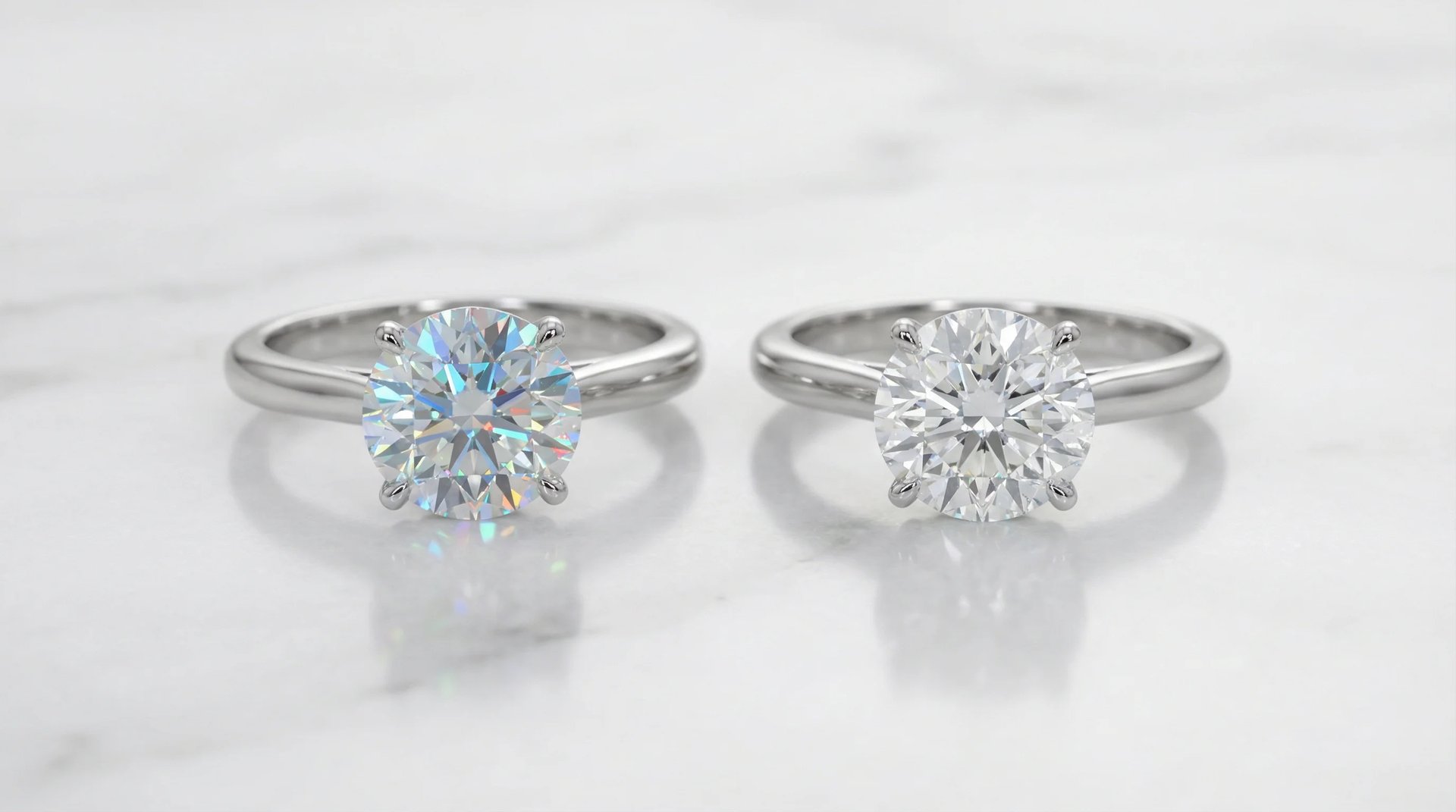
Moissanite vs Lab-Grown Diamond: Which Is Better Value in 2026?
Compare moissanite and lab-grown diamonds side by side. See the real price differences, visual comparisons, and which gemstone offers the best value for your budget.
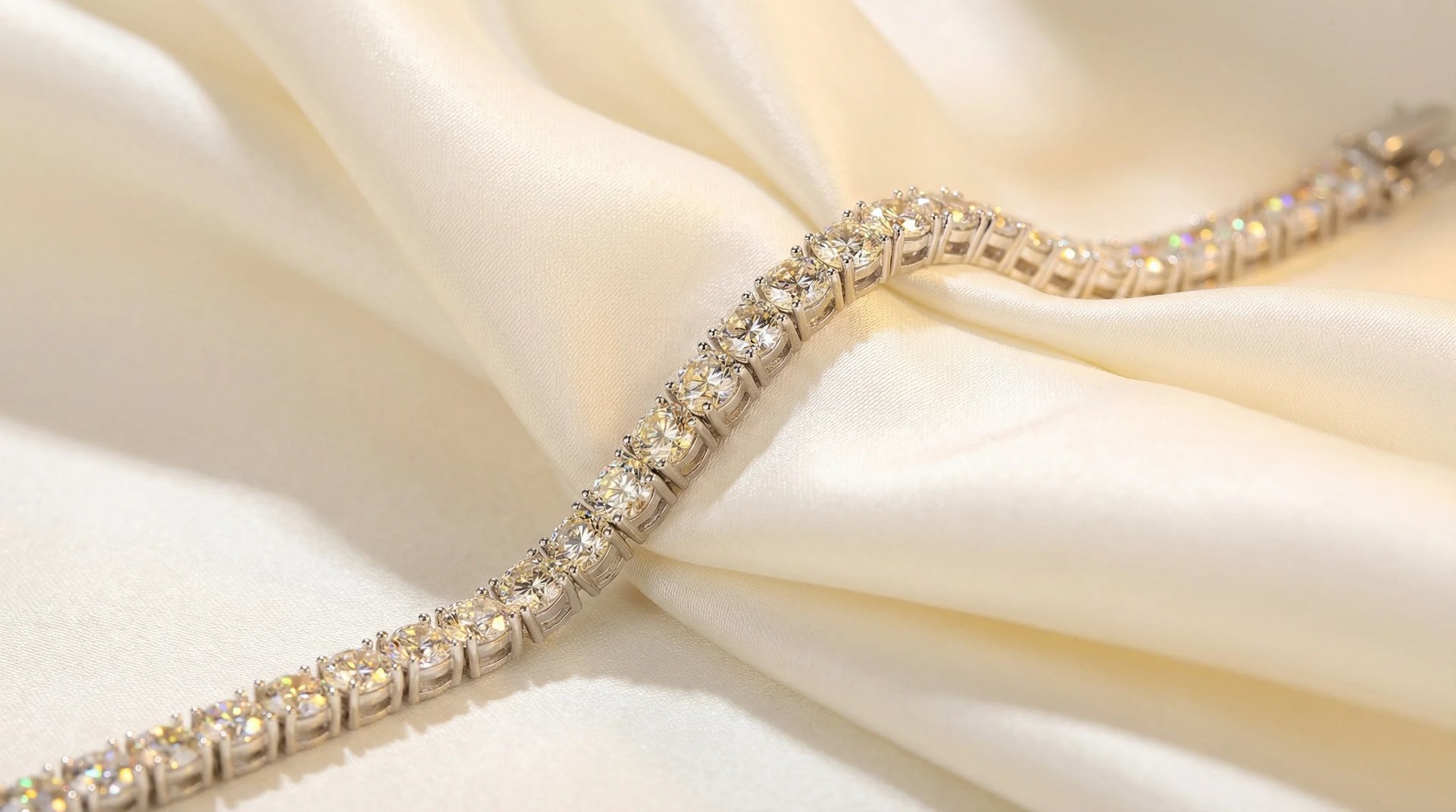
Moissanite Tennis Bracelets & Chains: The Complete Buying Guide
Everything you need to know about moissanite tennis bracelets and chains. Compare sizes, metals, and styles to find your perfect piece.
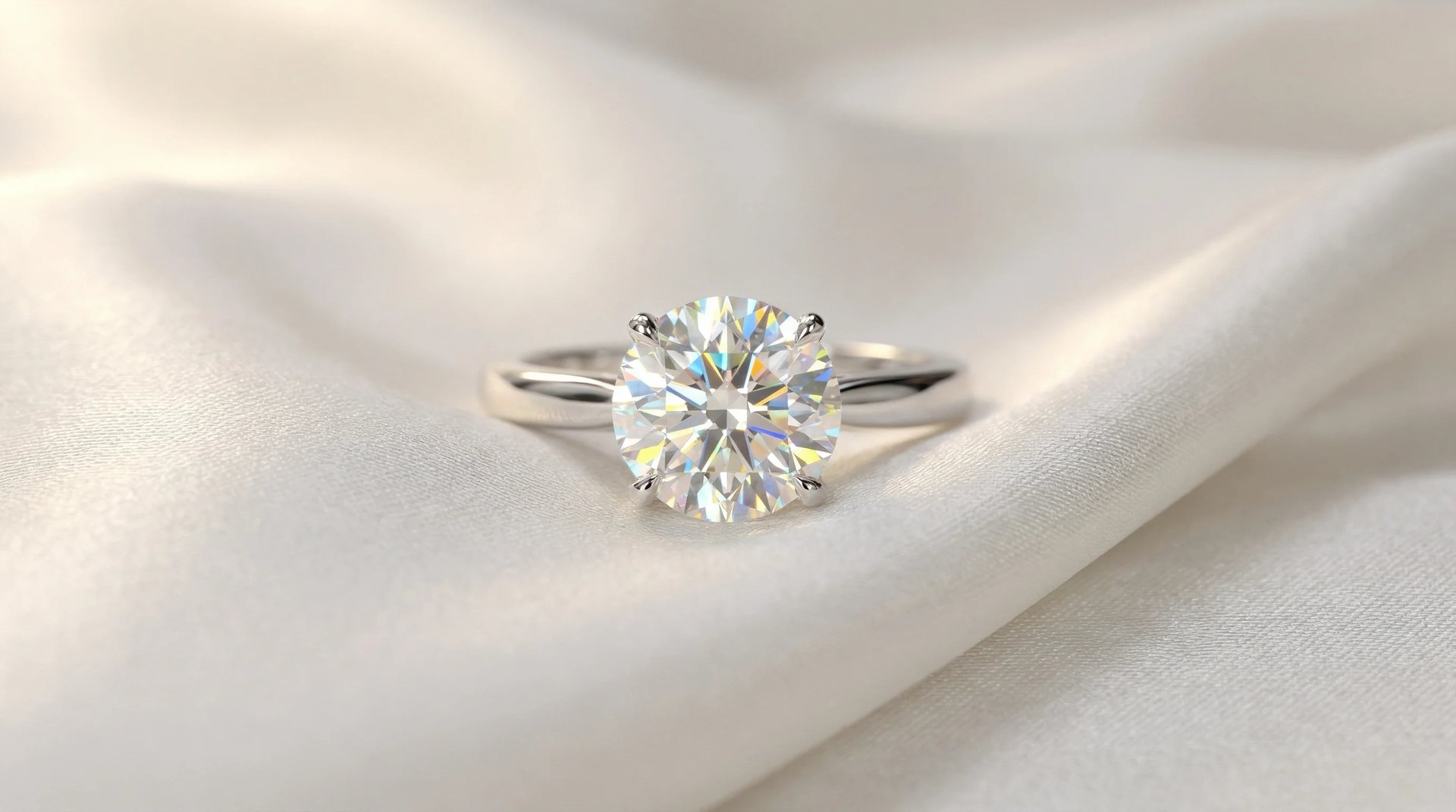
Does Moissanite Get Cloudy? Durability Myths Debunked (2026)
Worried about moissanite cloudiness? We debunk the top durability myths with scientific evidence. Learn why moissanite won't fade, scratch, or tarnish.