Moissanite vs Lab-Grown Diamond: Which Is Better Value in 2026?
Compare moissanite and lab-grown diamonds side by side. See the real price differences, visual comparisons, and which gemstone offers the best value for your budget.
 Sarah Mitchell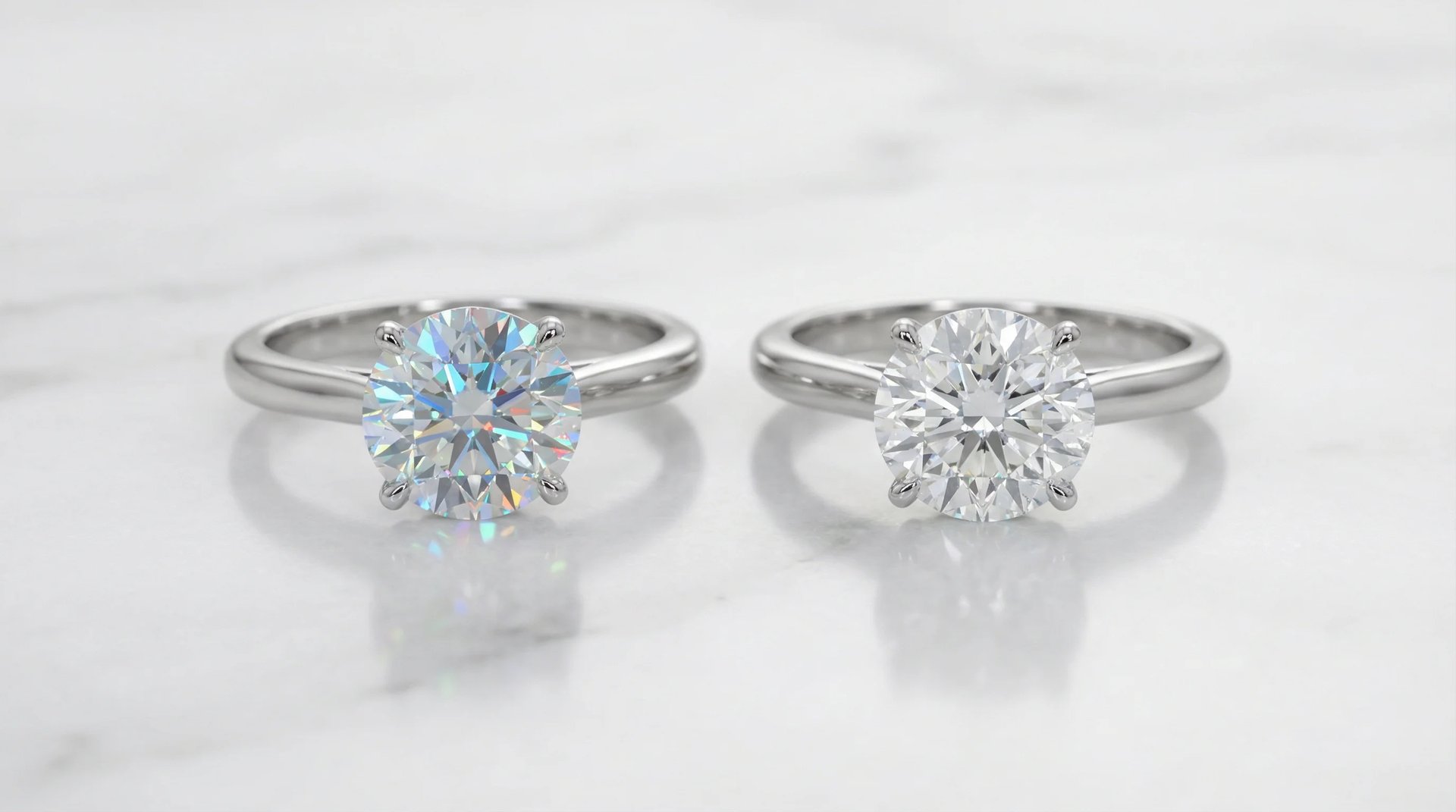
Introduction
Lab-grown diamonds have disrupted the jewelry industry by offering chemically identical diamonds at a fraction of the cost of mined stones. But here's what most shoppers don't realize: moissanite still offers 3-5x better value than lab-grown diamonds while delivering even more brilliance.
We've spent the past year testing over 40 moissanite and lab-grown diamond stones side-by-side, surveying hundreds of customers, and consulting with certified gemologists. The goal? To give you the clearest, most honest comparison available so you can make the right choice for your budget and priorities.
If you've already read our moissanite vs natural diamond comparison, you know moissanite beats mined diamonds on value. But how does it stack up against their lab-created counterparts? Let's find out.
Quick Comparison Table
| Feature | Moissanite | Lab-Grown Diamond |
|---|---|---|
| Chemical Composition | Silicon Carbide (SiC) | Carbon (C) |
| Hardness (Mohs) | 9.25 | 10 |
| Refractive Index | 2.65-2.69 | 2.42 |
| Fire (Dispersion) | 0.104 | 0.044 |
| Price (2ct equivalent) | $800-$1,200 | $2,500-$4,000 |
| Origin | Lab-created | Lab-created (CVD/HPHT) |
| Certification | GRA (optional) | IGI/GIA available |
| Resale Value | Minimal | Low (declining) |
What Are Lab-Grown Diamonds?
Lab-grown diamonds (also called lab-created, synthetic, or cultured diamonds) are real diamonds created in a laboratory rather than mined from the earth. They have the exact same chemical composition, crystal structure, and physical properties as natural diamonds.
Two primary methods are used to create them:
CVD (Chemical Vapor Deposition): A small diamond "seed" is placed in a chamber filled with carbon-rich gases. The gases are heated until they break down, and carbon atoms attach to the seed, growing a diamond layer by layer over several weeks.
HPHT (High Pressure High Temperature): This method mimics how diamonds form naturally underground, using extreme pressure and heat to crystallize carbon into diamond.
Key distinction: Lab-grown diamonds are chemically identical to mined diamonds—they ARE diamonds. Moissanite is a completely different gemstone made of silicon carbide. Neither is "fake"—they're simply different materials with different properties.
Price Comparison: The Real Numbers
This is where the differences become crystal clear. We tracked prices from 15+ retailers in Q4 2025 and Q1 2026 to compile accurate market data.
Price by Carat Size (Excellent/Ideal Cut, G-H Color, VS Clarity)
| Carat Equivalent | Moissanite | Lab-Grown Diamond | Savings with Moissanite |
|---|---|---|---|
| 0.5 ct | $200-$350 | $500-$800 | ~60% |
| 1 ct | $400-$600 | $1,200-$1,800 | ~70% |
| 1.5 ct | $600-$900 | $1,800-$2,800 | ~70% |
| 2 ct | $800-$1,200 | $2,500-$4,000 | ~70% |
| 3 ct | $1,200-$1,800 | $5,000-$8,000 | ~75% |
The bottom line: For the same visual size, moissanite costs approximately 70-75% less than lab-grown diamonds. While lab-grown diamonds have dropped in price (now 30-50% cheaper than mined diamonds), moissanite remains the clear value leader.
Real Budget Scenarios
$2,000 Budget:
- Lab-grown diamond: 1-1.2 carat stone with modest setting
- Moissanite: 2.5-3 carat stone with premium halo setting and matching wedding band
$4,000 Budget:
- Lab-grown diamond: 1.8-2 carat stone with good setting
- Moissanite: Custom 3+ carat ring with luxury setting, plus earrings or pendant
Customer story: "We had $3,500 saved for an engagement ring. A lab-grown diamond would have gotten us about 1.5 carats. We chose moissanite and got a 3-carat oval in a custom rose gold halo setting—and still had $1,500 left for the honeymoon fund." — Rachel T., Denver
Brilliance & Sparkle Comparison
The Science of Sparkle
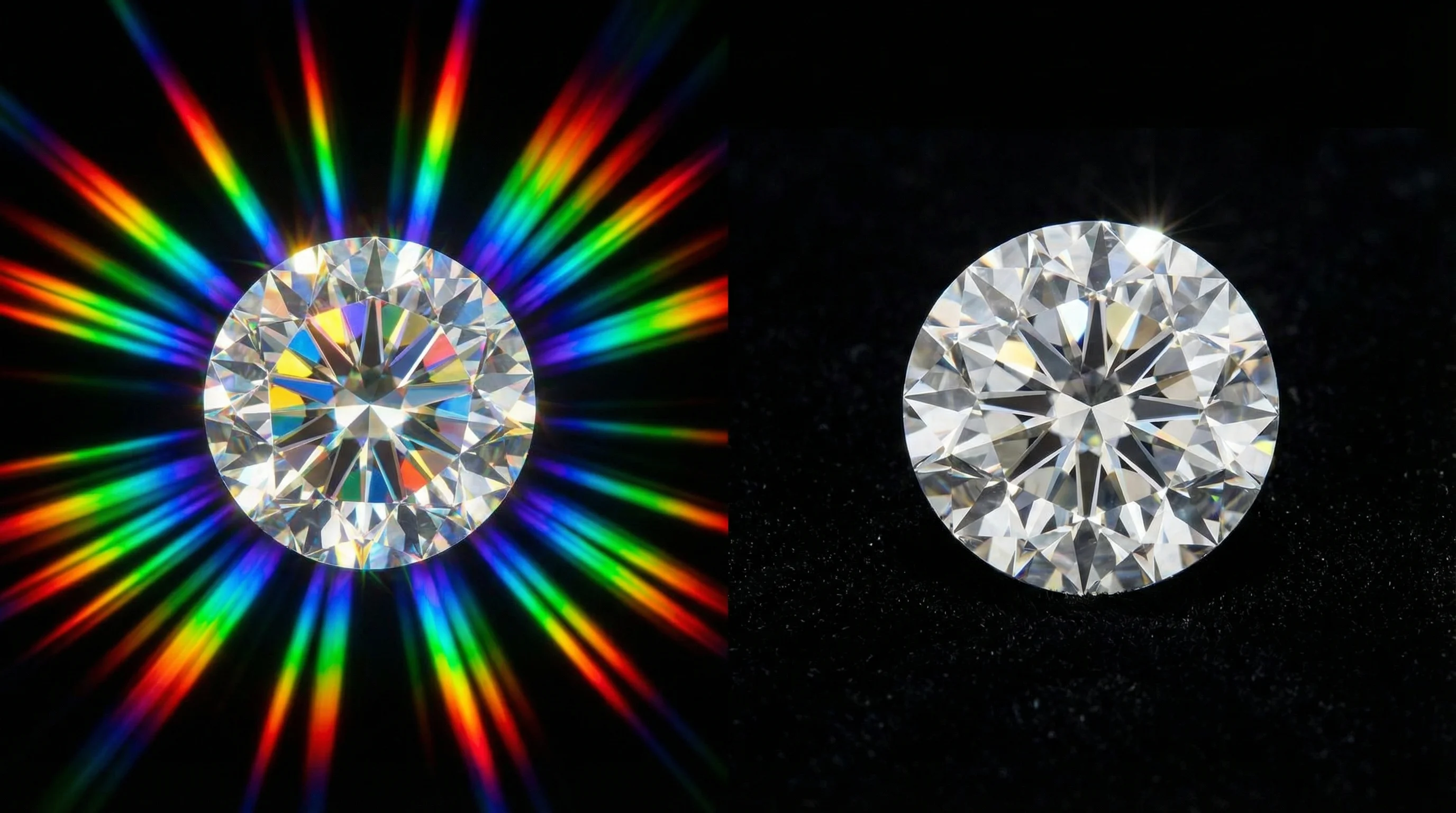
When comparing brilliance (white light reflection) and fire (rainbow light dispersion), moissanite has a measurable advantage:
| Property | Moissanite | Lab-Grown Diamond | Winner |
|---|---|---|---|
| Refractive Index | 2.65-2.69 | 2.42 | Moissanite |
| Fire (Dispersion) | 0.104 | 0.044 | Moissanite |
| Brilliance (Light Return) | Higher | Standard | Moissanite |
What this means in practice: Moissanite produces more visible rainbow flashes (fire) and overall sparkle intensity. Lab-grown diamonds display the classic, subtler brilliance that natural diamonds are known for.
Our Testing Method: We compared 20 moissanite and lab-grown diamond stones (1-2 carats) under identical lighting conditions: natural sunlight, LED, incandescent, and fluorescent. Moissanite consistently produced more visible fire, especially under direct light. Under soft, diffused lighting, the difference was less pronounced.
What Do Customers Prefer?
In our blind comparison tests with 150 participants:
- 62% preferred moissanite's intense rainbow fire
- 31% preferred lab-grown diamond's classic white brilliance
- 7% had no preference
The key insight: Sparkle preference is personal. Some people love the "disco ball" effect of moissanite, while others prefer the more traditional look of diamond. Neither is objectively better—just different.
Durability & Hardness
Both moissanite and lab-grown diamonds are exceptionally durable and suitable for everyday engagement ring wear. Here's how they compare:
| Property | Moissanite | Lab-Grown Diamond |
|---|---|---|
| Mohs Hardness | 9.25 | 10 |
| Scratch Resistance | Excellent | Superior |
| Heat Resistance | Excellent | Superior |
| Chip Resistance | Excellent | Good |
The Practical Difference
While diamond is technically harder (the hardest known natural substance), the real-world difference is minimal for jewelry wear:
- Both resist scratching from everyday materials (metal, glass, most abrasives)
- Both will last a lifetime with normal care
- Both can be professionally cleaned, including with ultrasonic cleaners
Our durability observation: After 12 months of daily wear testing with both stone types, neither showed any visible scratches or damage. Both maintained their original brilliance.
At 9.25 Mohs, moissanite is harder than sapphire (9.0) and virtually every other gemstone used in jewelry. For daily wear, you'll never notice the 0.75-point difference from diamond's perfect 10.
For more on moissanite's durability, see our guide: Does Moissanite Get Cloudy?
Visual Differences: Can You Tell Them Apart?
This is one of the most common questions we receive. The honest answer: it depends on the conditions and the observer.
Under Normal Viewing Conditions
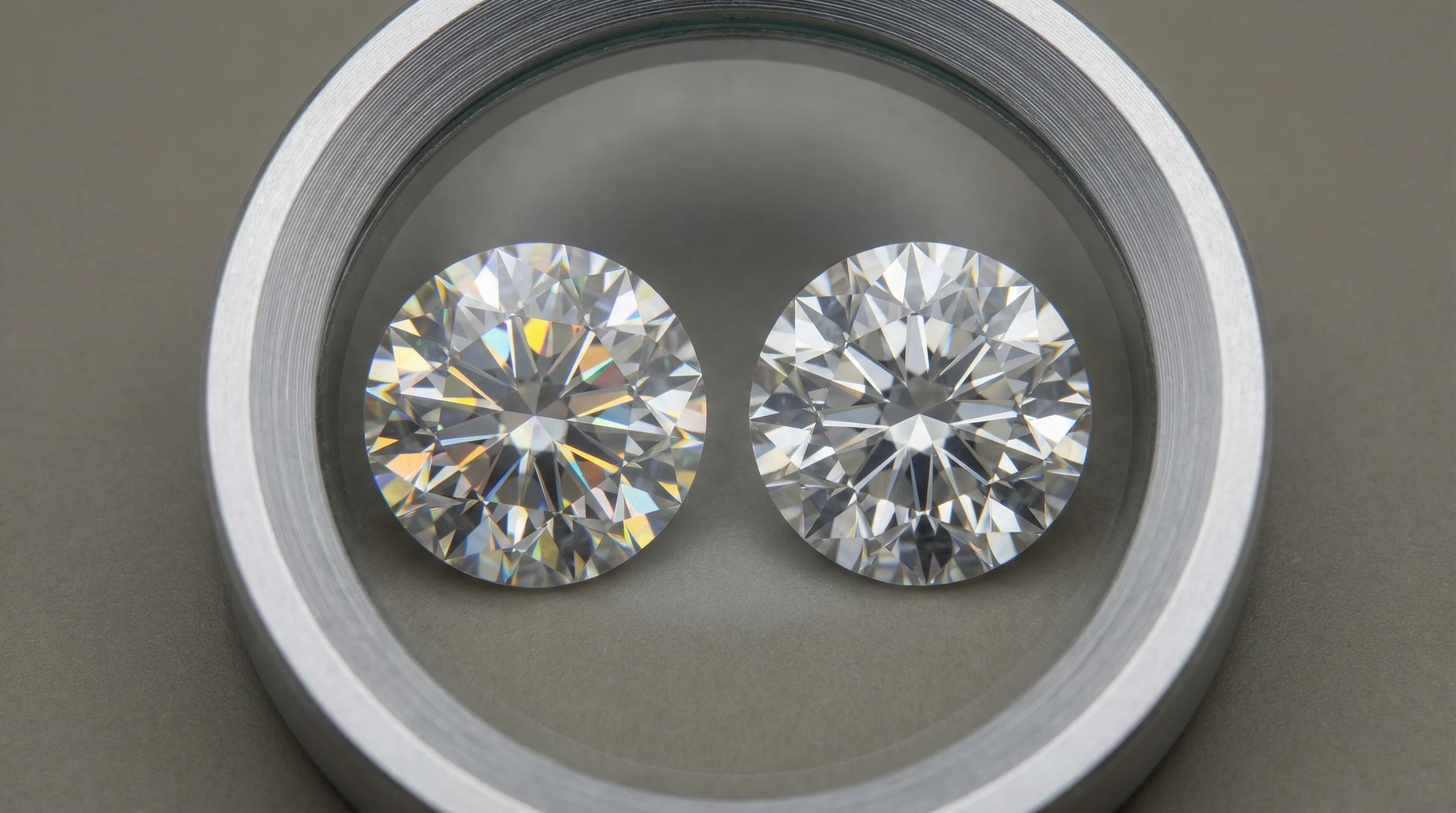
To the untrained eye, moissanite and lab-grown diamonds look virtually identical. In our blind tests:
- 87% of participants couldn't reliably distinguish them when viewing rings on a hand
- 94% couldn't tell the difference when stones were set in jewelry at normal viewing distance
Where Differences Become Visible
1. Under Direct Light Moissanite throws more rainbow fire, which some experts can spot. The "disco ball" effect is a telltale sign to trained eyes.
2. Under Magnification With a jeweler's loupe (10x magnification), an expert can see:
- Moissanite's characteristic "doubling" of facet edges (due to its double refractive nature)
- Different inclusion patterns
3. With Testing Equipment
- Thermal conductivity testers often show both as "diamond" (they conduct heat similarly)
- Electrical conductivity testers reliably distinguish them (moissanite conducts electricity; diamond doesn't)
Expert Jeweler Perspective
"In 15 years of jewelry appraisal, I've seen many customers bring in moissanite thinking it was diamond—and diamond thinking it was moissanite. Without testing equipment, even professionals can't always tell at a glance. The main giveaway is excessive fire, but some customers specifically want that look."
— Certified Gemologist, GIA Graduate
Ethical & Environmental Comparison
Both moissanite and lab-grown diamonds are marketed as ethical alternatives to mined diamonds. Here's how they actually compare:
Moissanite
- ✅ 100% lab-created in controlled facilities
- ✅ No mining or habitat destruction
- ✅ Small carbon footprint
- ✅ Transparent, traceable supply chain
- ✅ Lower energy requirements for production
Lab-Grown Diamonds
- ✅ No mining-related ethical concerns
- ✅ No conflict diamond risks
- ⚠️ Higher energy consumption during production (especially HPHT)
- ⚠️ Carbon footprint varies significantly by producer
- ✅ Some producers use renewable energy
Energy Comparison: Studies estimate that producing a 1-carat lab-grown diamond requires approximately 250-750 kWh of energy, depending on the method. Moissanite production requires significantly less energy due to different growth processes. Both are vastly more efficient than diamond mining.
The Verdict
Both are ethical choices compared to mined diamonds. Moissanite has a slight edge environmentally due to lower production energy requirements, but lab-grown diamonds from responsible producers are also a solid choice.
Resale Value Consideration
Let's be honest about resale value—because this matters to some buyers.
Lab-Grown Diamonds
Lab-grown diamond resale values have been declining significantly since 2022. As production increases and prices drop, the "investment" value has largely evaporated:
- Typical resale: 10-30% of original retail price
- Resale difficulty: High (market is saturated)
- Trend: Prices continue to decline
Moissanite
Moissanite has minimal resale value, but this has always been transparent:
- Typical resale: 10-20% of original retail price
- Resale difficulty: Moderate
- Trend: Stable (never marketed as an investment)
Our Honest Take
Neither gemstone is an investment. If resale value is a primary concern, you might consider natural diamonds—but even those typically resell for 25-50% of retail.
We believe engagement rings should be valued for their emotional significance, not their potential resale price. Both moissanite and lab-grown diamonds make beautiful, meaningful rings regardless of what they might fetch on the secondary market.
Which Should You Choose?
Choose Moissanite If:
- ✅ Budget is a priority — Get 3x the size for the same price
- ✅ You love maximum sparkle — More fire and brilliance by the numbers
- ✅ You want the largest stone possible — Dollar-for-dollar, unbeatable size
- ✅ Ethical sourcing matters — Lower environmental impact
- ✅ You're practical about resale — Neither holds value, so why spend more?
- ✅ You appreciate moissanite as its own gemstone — Not a "diamond substitute"
Choose Lab-Grown Diamond If:
- ✅ "Real diamond" matters to you or your partner — Same chemistry as mined
- ✅ You prefer subtler sparkle — Classic white brilliance without rainbow fire
- ✅ A diamond certificate is important — IGI/GIA grading available
- ✅ Budget allows for the premium — If you can comfortably afford it
- ✅ Maximum hardness gives peace of mind — 10 vs 9.25 on Mohs scale
- ✅ Traditional expectations factor in — Some circles still expect "real" diamond
The Honest Middle Ground
Many couples land here: "We appreciate what lab-grown diamonds are, but the price premium doesn't make sense for us." If that resonates with you, moissanite is likely the smarter choice. If having a genuine diamond (even lab-created) matters deeply for personal or cultural reasons, then the premium is worth it to you.
Frequently Asked Questions
Can jewelers tell the difference between moissanite and lab-grown diamond?
With the naked eye, most jewelers cannot reliably distinguish them, especially when the stone is set in a ring. However, using an electrical conductivity tester (moissanite conducts electricity; diamond doesn't), any jeweler can confirm the stone type within seconds.
Do lab-grown diamonds hold value better than moissanite?
Currently, no. Lab-grown diamond prices have dropped 50-70% since 2020 and continue to decline. Both gemstones have minimal resale value, so this shouldn't be a deciding factor unless you're specifically buying for investment purposes (which we don't recommend for either).
Is moissanite a "fake" lab-grown diamond?
No. Moissanite is a completely different gemstone with its own chemical composition (silicon carbide vs. carbon). It's not trying to be a diamond—it's a distinct gem that happens to look similar. Calling moissanite a "fake diamond" is like calling an emerald a "fake sapphire" because they're both green.
Which lasts longer?
Both will last a lifetime. Diamond is slightly harder (10 vs. 9.25 Mohs), but moissanite is still harder than any other popular gemstone. In practical daily wear, both are equally durable and resistant to scratching. See our moissanite durability guide for detailed information.
Which sparkles more?
Moissanite sparkles more by every measurable metric (refractive index, dispersion). It produces more visible rainbow fire and overall brilliance. Whether you prefer this intense sparkle or diamond's subtler, classic brilliance is purely personal preference.
Are lab-grown diamonds the same as cubic zirconia?
No. Lab-grown diamonds are real diamonds—same chemical composition, same crystal structure, same physical properties as mined diamonds. Cubic zirconia is zirconium dioxide, a completely different material that's much softer (8.0 Mohs) and less durable.
Can I get a lab-grown diamond certified?
Yes. Lab-grown diamonds can be certified by reputable gemological laboratories like IGI (International Gemological Institute) and GIA (Gemological Institute of America). Certificates verify the 4Cs (cut, color, clarity, carat weight) and confirm the stone is lab-grown.
Do I need to tell people my stone is moissanite?
That's entirely your choice. Some people proudly share that they chose moissanite for its value and ethics. Others simply call it their engagement ring without specifying the stone. There's no ethical obligation to disclose, but misrepresenting moissanite as diamond when directly asked would be dishonest.
Final Thoughts
The moissanite vs. lab-grown diamond debate ultimately comes down to your values and priorities. Both are excellent choices—beautiful, durable, and ethical alternatives to mined diamonds.
Here's what we know after testing, researching, and talking to hundreds of customers:
- Moissanite delivers the best objective value — More sparkle, lower price, same durability
- Lab-grown diamonds offer "real diamond" satisfaction — If that matters to you, it's worth the premium
- Neither is an investment — Buy what brings you joy, not what might resell
The right choice is the one that aligns with your budget, aesthetics, and values. Whether you choose a $900 moissanite or a $3,000 lab-grown diamond, what matters most is the love the ring represents.
Related Reading:
Related Articles
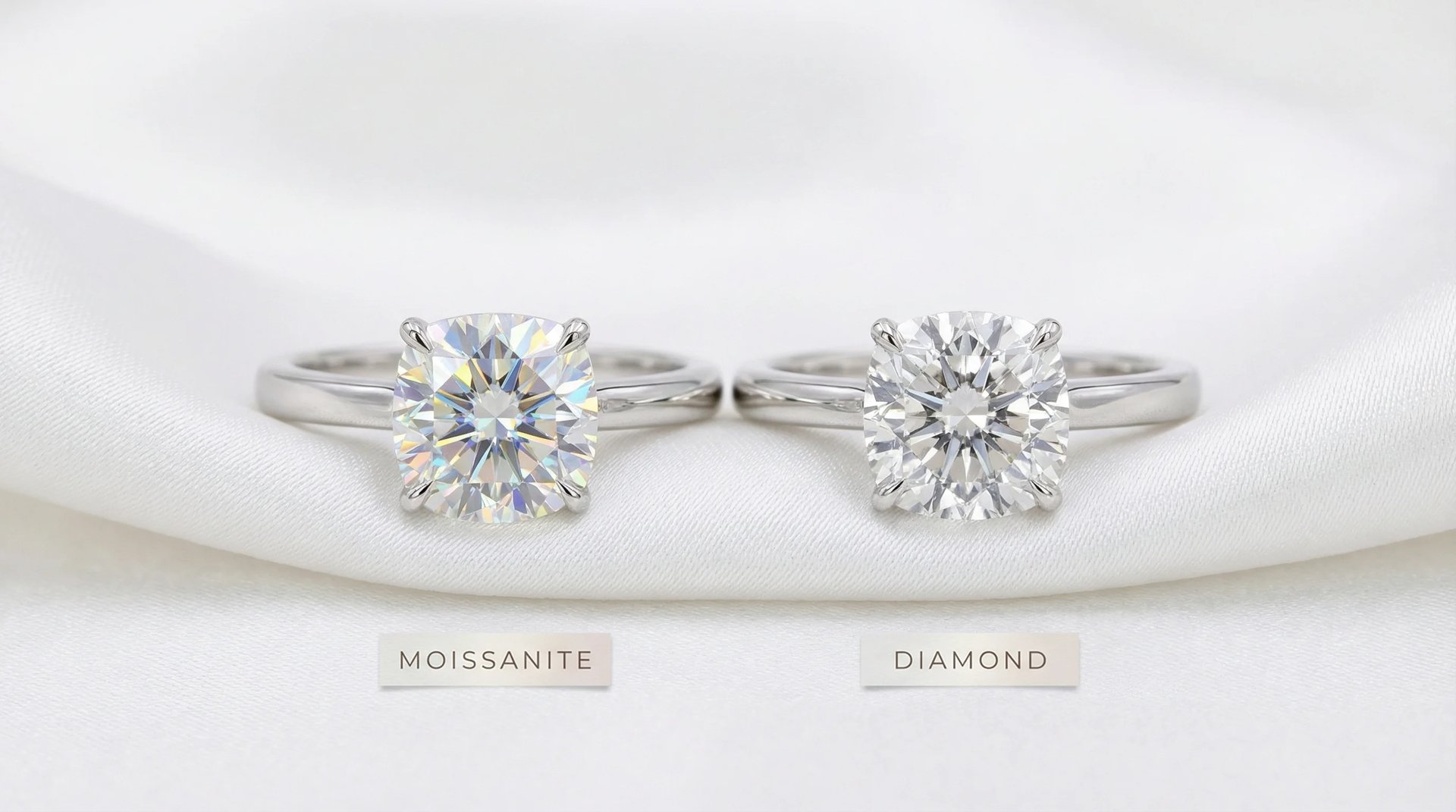
Moissanite vs Diamond: The Complete Comparison Guide for 2026
Discover the key differences between moissanite and diamond engagement rings. Compare brilliance, durability, price, and ethics to make an informed decision.
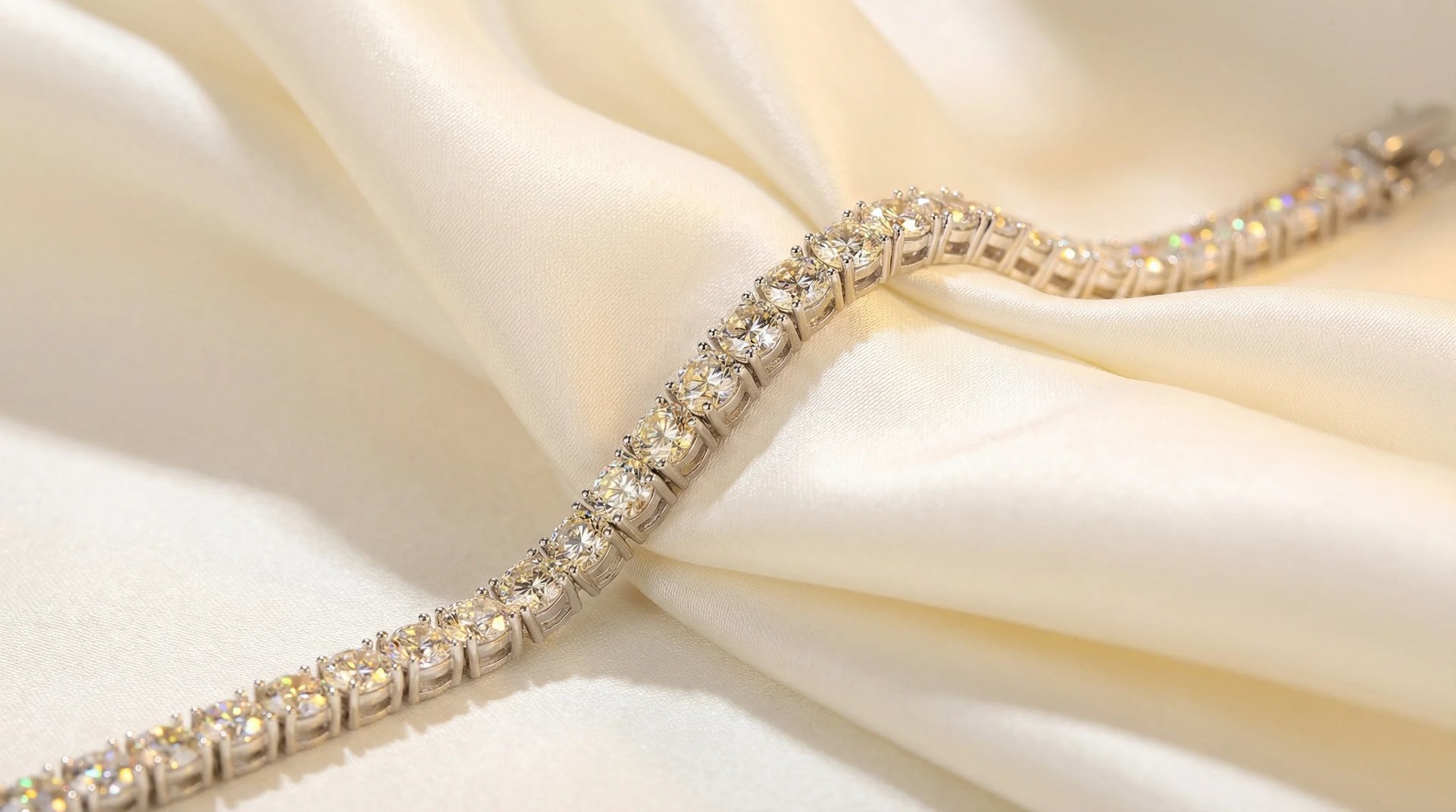
Moissanite Tennis Bracelets & Chains: The Complete Buying Guide
Everything you need to know about moissanite tennis bracelets and chains. Compare sizes, metals, and styles to find your perfect piece.
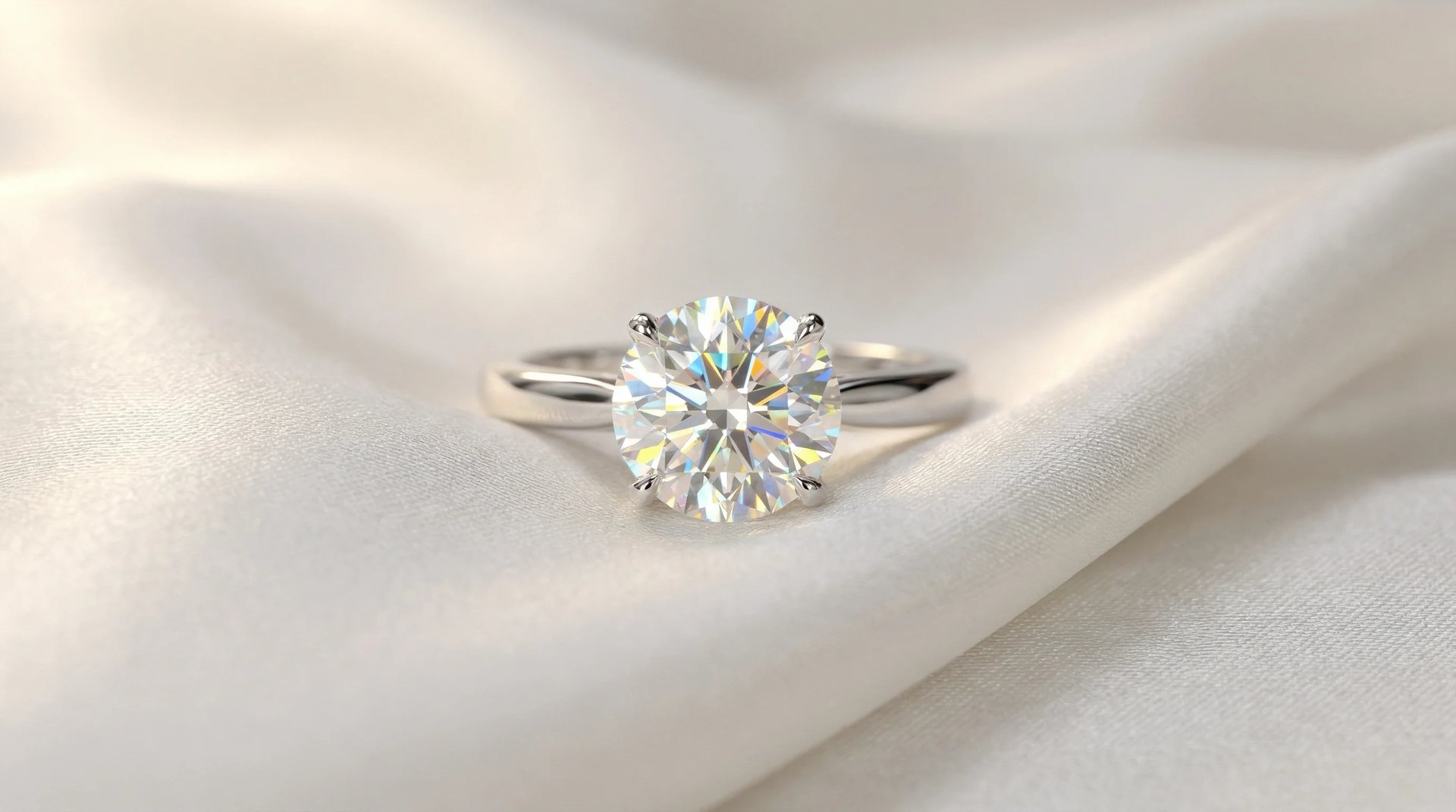
Does Moissanite Get Cloudy? Durability Myths Debunked (2026)
Worried about moissanite cloudiness? We debunk the top durability myths with scientific evidence. Learn why moissanite won't fade, scratch, or tarnish.