Moissanite Tennis Bracelets & Chains: The Complete Buying Guide
Everything you need to know about moissanite tennis bracelets and chains. Compare sizes, metals, and styles to find your perfect piece.
 Sarah Mitchell
Introduction
A single row of stones, each one catching the light as you move—that's the magic of a tennis bracelet. Named after Chris Evert's famous mid-match moment in 1987 when her diamond bracelet flew off during the US Open, tennis bracelets have become one of the most iconic jewelry styles in the world.
But here's what most people don't realize: moissanite tennis bracelets and chains deliver the same stunning sparkle at a fraction of the cost—often 80-90% less than diamond equivalents.
Whether you're shopping for a classic bracelet, a statement tennis chain, or trying to understand the difference between 3mm and 5mm stones, this guide covers everything you need to make an informed decision.
Quick Navigation
- What Makes a Tennis Bracelet?
- Size Guide: 3mm vs 4mm vs 5mm
- Metal Options
- Tennis Bracelets vs Tennis Chains
- Styling for Men and Women
- Clasp Types and Security
- Length Guide
- Care and Maintenance
- FAQ
What Makes a Tennis Bracelet?
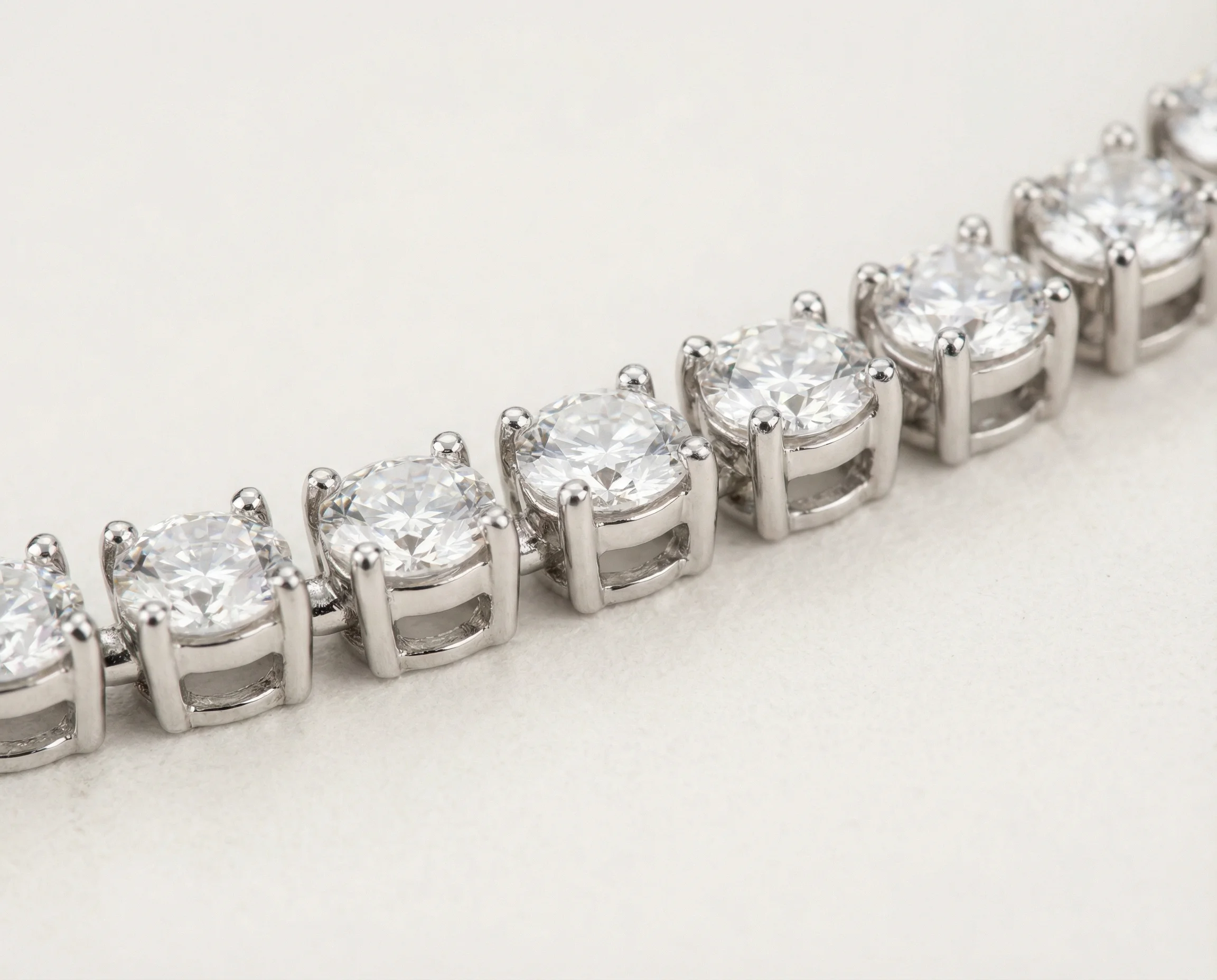
A tennis bracelet is defined by its construction: a single row of individually set gemstones connected by a thin, flexible metal chain. Each stone sits in its own setting—typically a four-prong or bezel mount—creating an unbroken line of brilliance around the wrist.
Key Characteristics
- Continuous sparkle: Stones are set close together with minimal metal showing
- Flexibility: The bracelet bends naturally with wrist movement
- Symmetry: All stones are the same size and cut (typically round brilliant)
- Secure closure: Features a clasp with safety mechanisms
Why Moissanite Works Perfectly for Tennis Bracelets
Tennis bracelets showcase many stones in a row, making them one of the most expensive diamond jewelry purchases. A diamond tennis bracelet with 3-carat total weight can easily cost $8,000-$15,000.
Moissanite changes the equation entirely:
| Total Carat Weight | Diamond Cost | Moissanite Cost | Savings |
|---|---|---|---|
| 3 ct total | $8,000-$15,000 | $400-$800 | ~95% |
| 5 ct total | $15,000-$30,000 | $600-$1,200 | ~96% |
| 10 ct total | $40,000+ | $1,000-$2,000 | ~97% |
Beyond price, moissanite's superior fire (0.104 vs diamond's 0.044) means your bracelet will throw more rainbow flashes as you move—exactly what you want from tennis jewelry.
Moissanite's higher refractive index (2.65-2.69 vs diamond's 2.42) makes it particularly stunning in tennis bracelets, where light catches each stone from different angles as your wrist moves.
Size Guide: 3mm vs 4mm vs 5mm
Choosing the right stone size is the most important decision when buying a tennis bracelet or chain. Here's how different sizes compare:
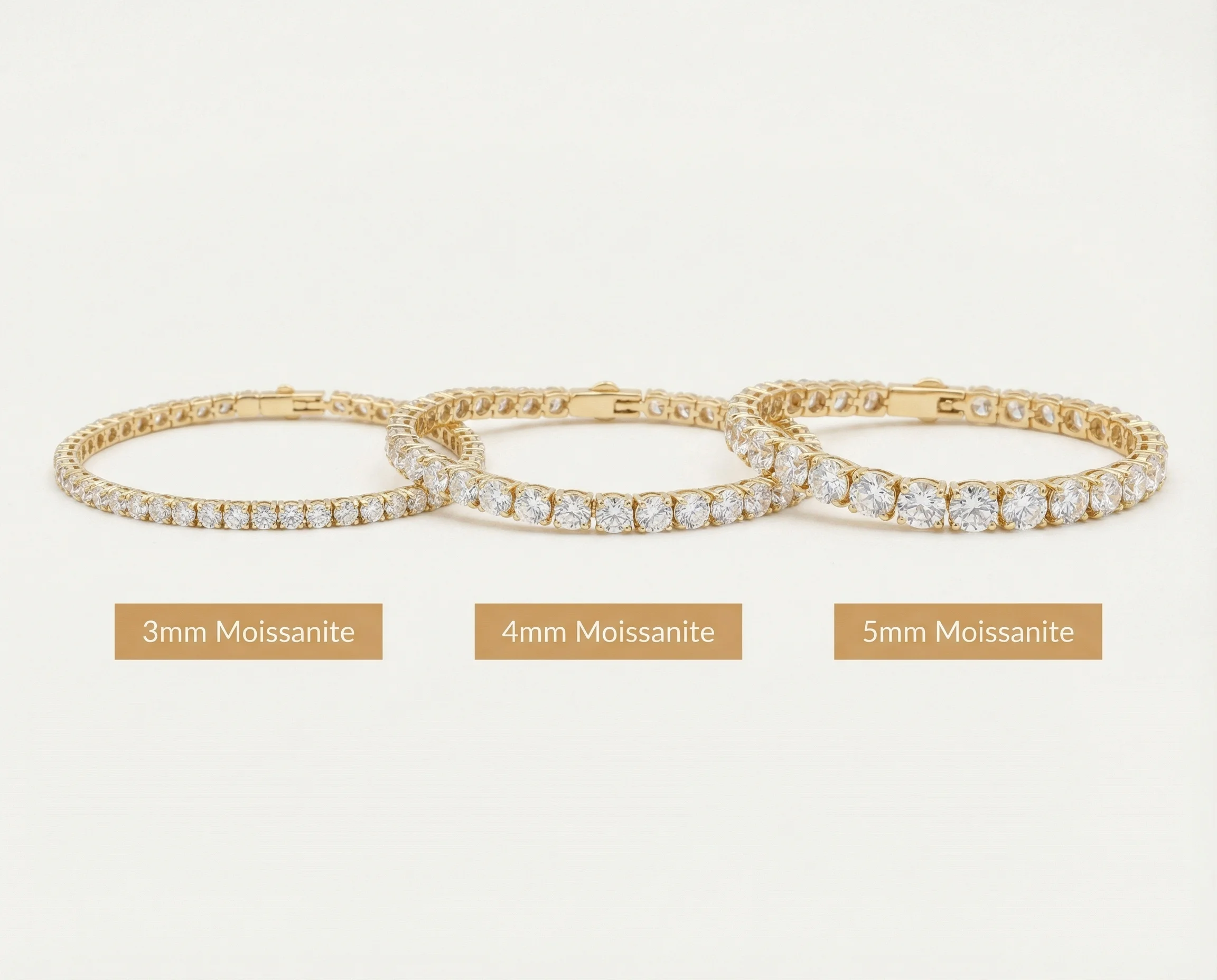
3mm Stones (~0.10 ct each)
Best for: Everyday elegance, smaller wrists, subtle luxury
- Look: Delicate and refined
- Total weight: ~2.5-3 ct for a standard 7" bracelet
- Vibe: Classic, understated, office-appropriate
- Price range: Most affordable option
3mm is the most popular size for women's tennis bracelets. It's substantial enough to sparkle but subtle enough for daily wear.
4mm Stones (~0.25 ct each)
Best for: Balanced sparkle, versatile styling, special occasions
- Look: Noticeable but not overwhelming
- Total weight: ~5-6 ct for a standard 7" bracelet
- Vibe: Eye-catching, elegant, statement piece
- Price range: Mid-range
4mm hits the sweet spot for many buyers—visible sparkle without being too bold for everyday wear.
5mm Stones (~0.50 ct each)
Best for: Maximum impact, men's jewelry, statement pieces
- Look: Bold and dramatic
- Total weight: ~10-12 ct for a standard 7" bracelet
- Vibe: Luxurious, attention-grabbing, hip-hop influenced
- Price range: Higher end (but still far less than diamond)
5mm and larger sizes are popular for tennis chains and men's bracelets where bold styling is the goal.
Size Comparison on Wrist
| Stone Size | Approximate Carat Each | Best For | Overall Vibe |
|---|---|---|---|
| 2mm | 0.03 ct | Ultra-delicate, layering | Whisper-thin elegance |
| 3mm | 0.10 ct | Everyday wear, classic style | Refined luxury |
| 4mm | 0.25 ct | Versatile, special occasions | Balanced sparkle |
| 5mm | 0.50 ct | Statement pieces, men's jewelry | Bold impact |
| 6mm+ | 0.75+ ct | Maximum statement, chains | Dramatic luxury |
Not sure which size? 3mm for subtle everyday elegance, 4mm for noticeable sparkle that still works daily, 5mm+ for statement pieces and men's styles.
Metal Options and Durability
The metal you choose affects both the look and longevity of your tennis bracelet. Here's what to consider:
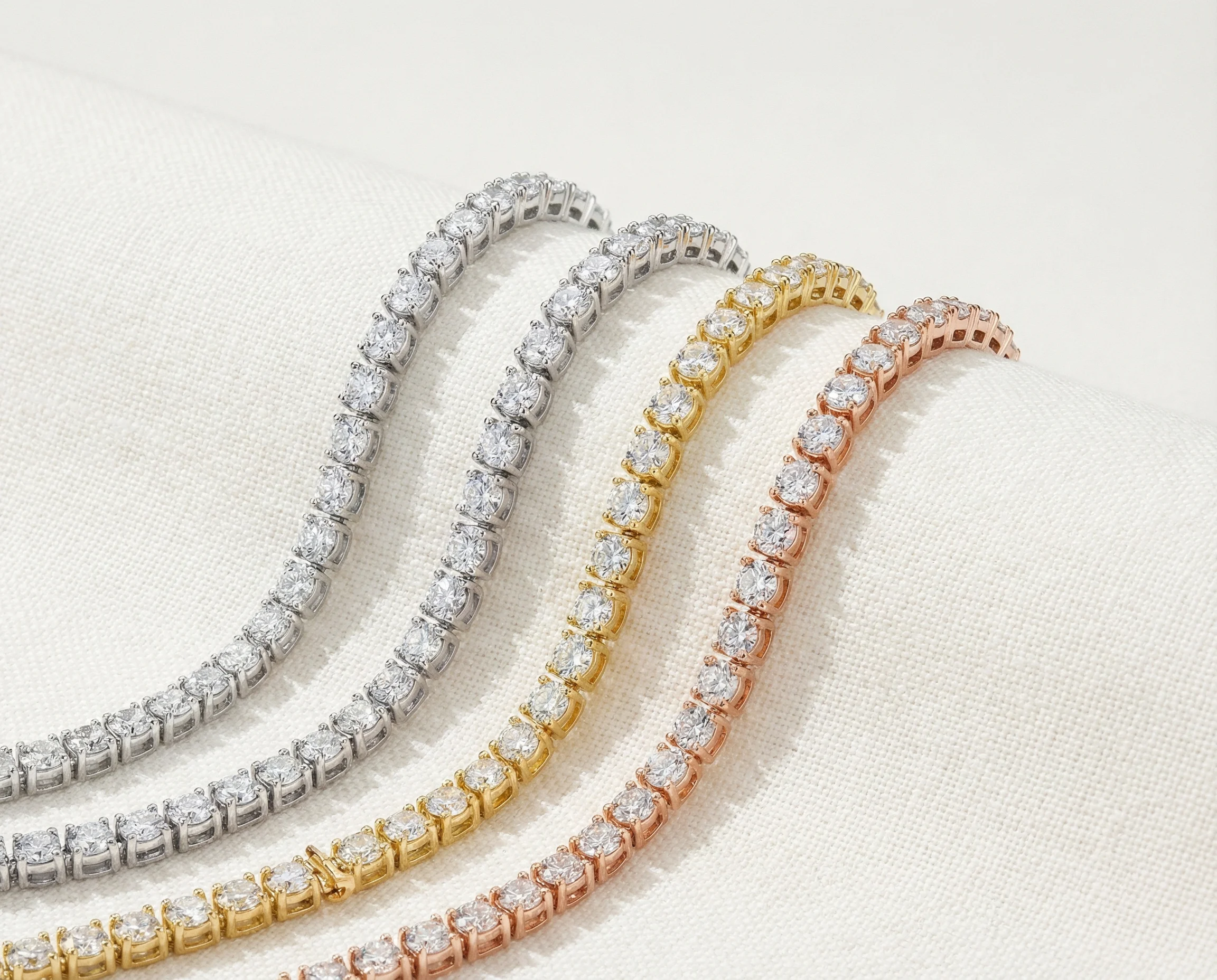
Sterling Silver (925)
Pros:
- Most affordable option
- Bright white color complements moissanite beautifully
- Easy to find and replace if damaged
Cons:
- Tarnishes over time (requires regular polishing)
- Softer metal, more prone to scratches
- May cause skin reactions in some people
Best for: Budget-conscious buyers, occasional wear, testing if you like the style
14K White Gold
Pros:
- Durable for daily wear
- Maintains bright white appearance (when rhodium-plated)
- Hypoallergenic for most people
- Good balance of quality and price
Cons:
- Requires rhodium re-plating every 1-2 years
- More expensive than silver
Best for: Daily wear, long-term investment, classic style
14K Yellow Gold
Pros:
- Warm, traditional appearance
- Never needs re-plating
- Naturally hypoallergenic
- Timeless appeal
Cons:
- Yellow color creates different aesthetic than white metals
- Shows scratches more visibly
Best for: Those who prefer warm tones, vintage enthusiasts, low-maintenance seekers
14K Rose Gold
Pros:
- Romantic, feminine appearance
- Unique and trendy
- Complements warm skin tones beautifully
- Develops subtle patina many love
Cons:
- Not as versatile as white or yellow gold
- May not match all jewelry collections
Best for: Fashion-forward buyers, those who love pink/copper tones
Platinum
Pros:
- Most durable precious metal
- Naturally white (no plating needed)
- Hypoallergenic
- Develops beautiful patina over time
Cons:
- Significantly more expensive
- Heavier weight (which some dislike)
Best for: Those seeking the ultimate in durability and luxury
Metal Comparison Chart
| Metal | Durability | Maintenance | Price | Best For |
|---|---|---|---|---|
| Sterling Silver | ⭐⭐ | High (tarnishes) | $ | Budget, occasional wear |
| 14K White Gold | ⭐⭐⭐⭐ | Medium (re-plating) | $$$ | Daily wear, classic |
| 14K Yellow Gold | ⭐⭐⭐⭐ | Low | $$$ | Warm tones, low maintenance |
| 14K Rose Gold | ⭐⭐⭐⭐ | Low | $$$ | Fashion-forward, romantic |
| Platinum | ⭐⭐⭐⭐⭐ | Very Low | $$$$ | Ultimate durability |
Tennis Bracelets vs Tennis Chains
While the terms are sometimes used interchangeably, there are key differences:
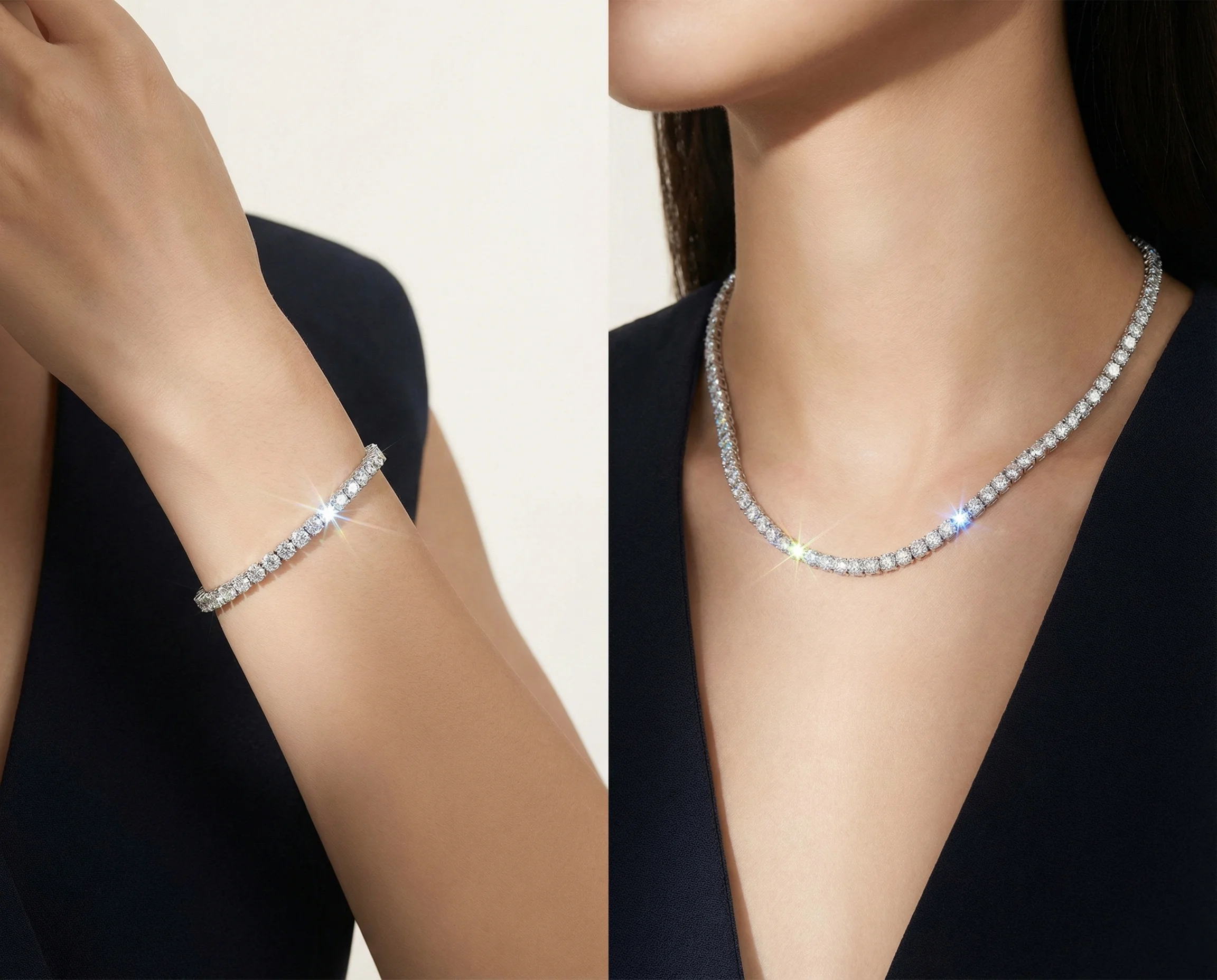
Tennis Bracelet
- Worn on: Wrist
- Typical length: 6.5" to 8"
- Stone size: Usually 2mm-5mm
- Style: Classic, elegant, suitable for formal and casual
- Gender: Traditionally feminine, but unisex styles available
Tennis Chain (Tennis Necklace)
- Worn on: Neck
- Typical length: 16" to 24"
- Stone size: Often 3mm-6mm (larger for visibility)
- Style: Statement piece, often associated with hip-hop culture
- Gender: Popular with men and women
Key Differences
Construction: Tennis chains need sturdier construction to handle the weight of more stones and the stress of neck movement. Look for reinforced links and secure clasps.
Stone count: A 20" tennis chain might have 80-100+ stones, while a 7" bracelet has 25-35 stones. This dramatically affects price even with moissanite.
Visibility: Chains sit against clothing, so larger stones (4mm+) are often preferred for impact. Bracelets are more visible against skin, so smaller stones still make a statement.
Styling for Men and Women
Tennis jewelry has evolved far beyond its traditional roots. Here's how different people wear these pieces today:
Women's Tennis Bracelet Styling
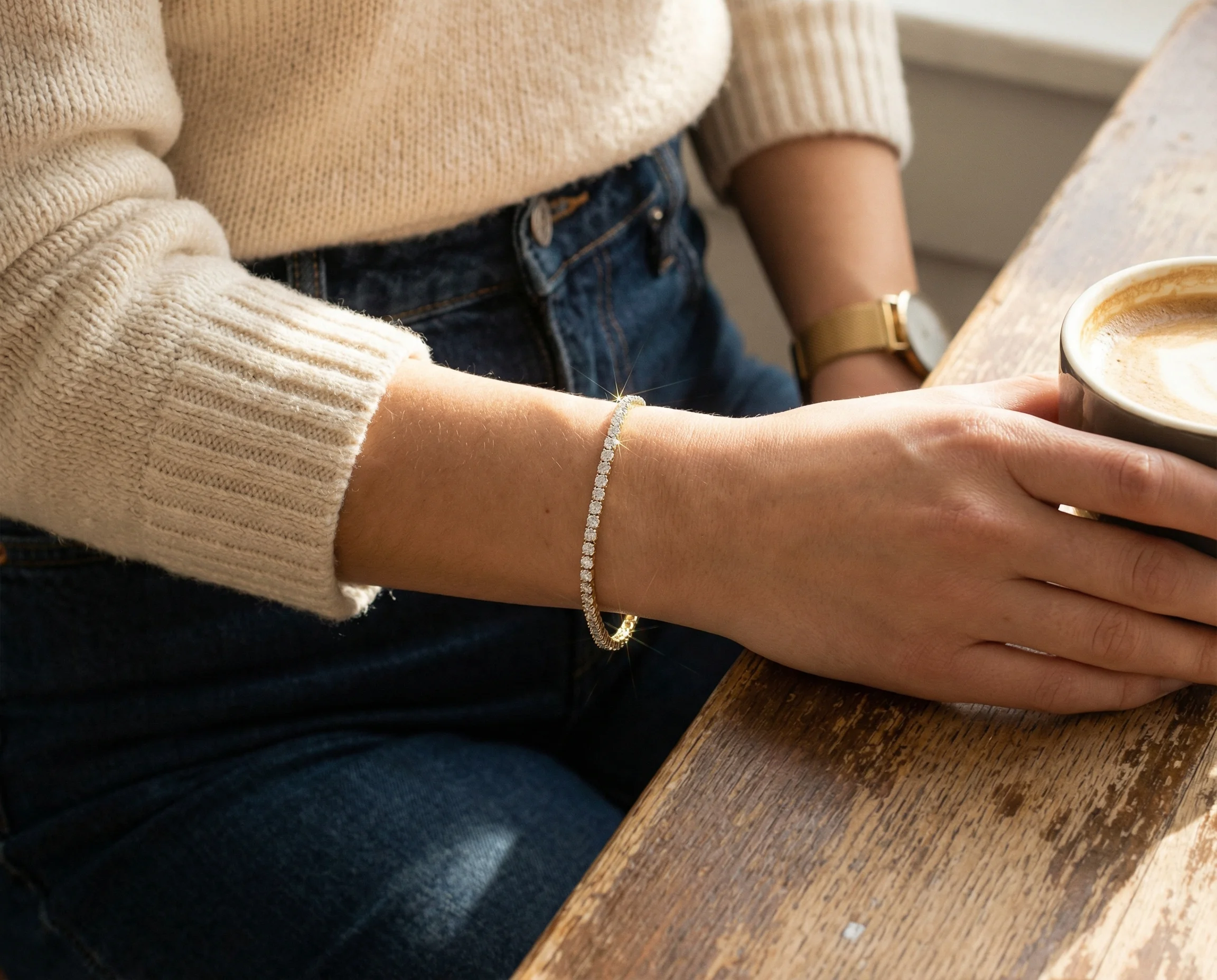
Classic Elegance
- Single 3mm tennis bracelet
- Paired with simple watch or alone
- Works for office, date night, everyday
Stacked Look
- Layer 2-3 different width bracelets
- Mix metals for modern feel
- Add bangles or cuffs for texture
Wedding/Formal
- 4mm bracelet for extra sparkle
- Coordinate with earrings and necklace
- Choose matching metal to other jewelry
Men's Tennis Bracelet & Chain Styling
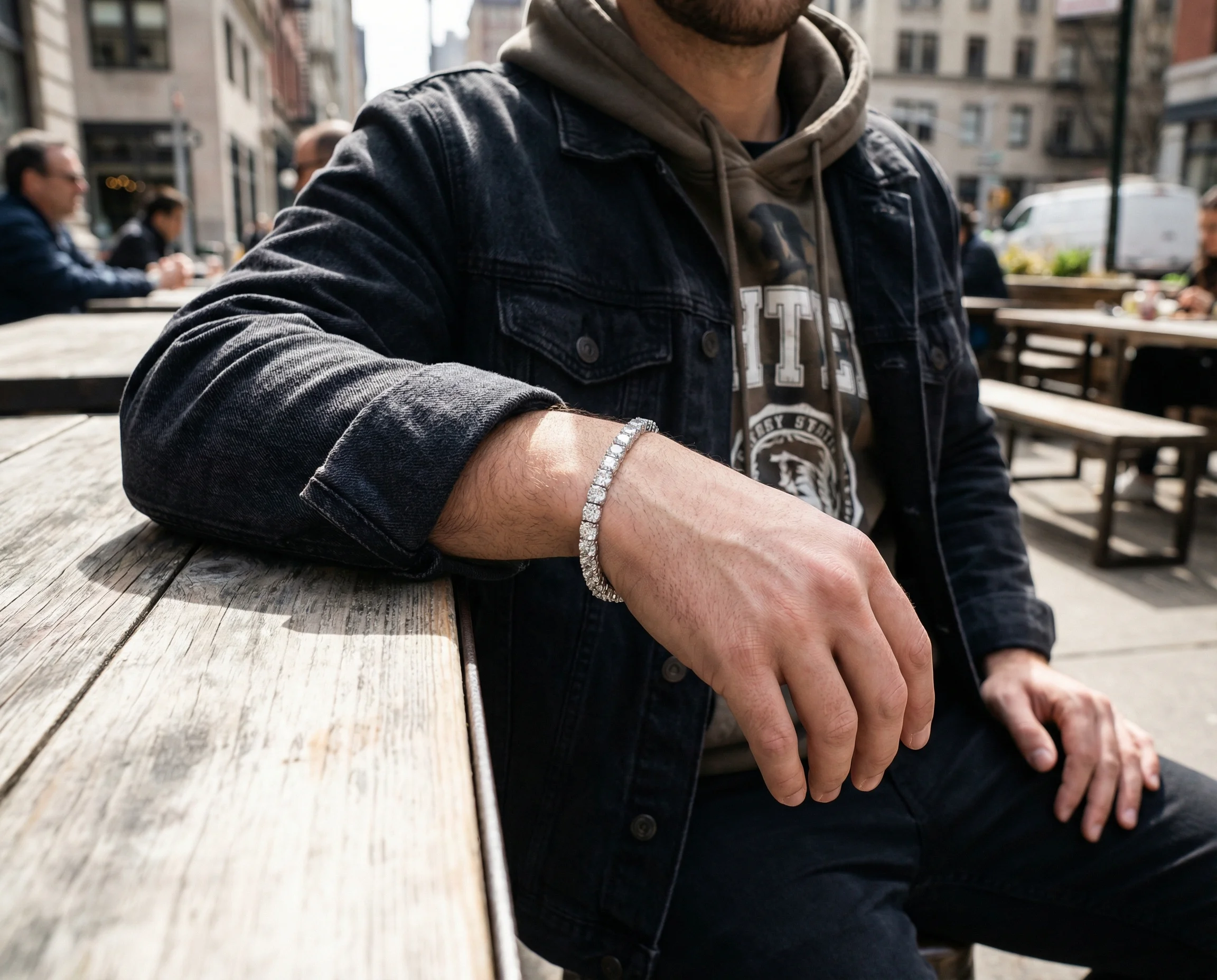
Subtle Luxury
- 4mm-5mm bracelet in white or yellow gold
- Worn alone or with simple watch
- Professional yet distinctive
Statement Style
- 5mm+ tennis chain, 20-24" length
- Bold bracelet to match
- Often layered with other chains
Streetwear/Hip-Hop
- 6mm+ stones for maximum impact
- Iced-out aesthetic
- Multiple pieces for layered look
Unisex Styling Tips
- Match metals: Stick to one metal color per outfit for cohesion
- Consider proportion: Larger frames can handle bigger stones
- Think about lifestyle: Active lifestyles may prefer secure clasps
- Layer intentionally: Mix textures and widths, but keep metal consistent
The most important styling rule? Wear what makes you feel confident. Tennis jewelry has no gender—only personal style.
Clasp Types and Security
A beautiful bracelet is worthless if it falls off your wrist. Understanding clasp types helps you choose a secure option.
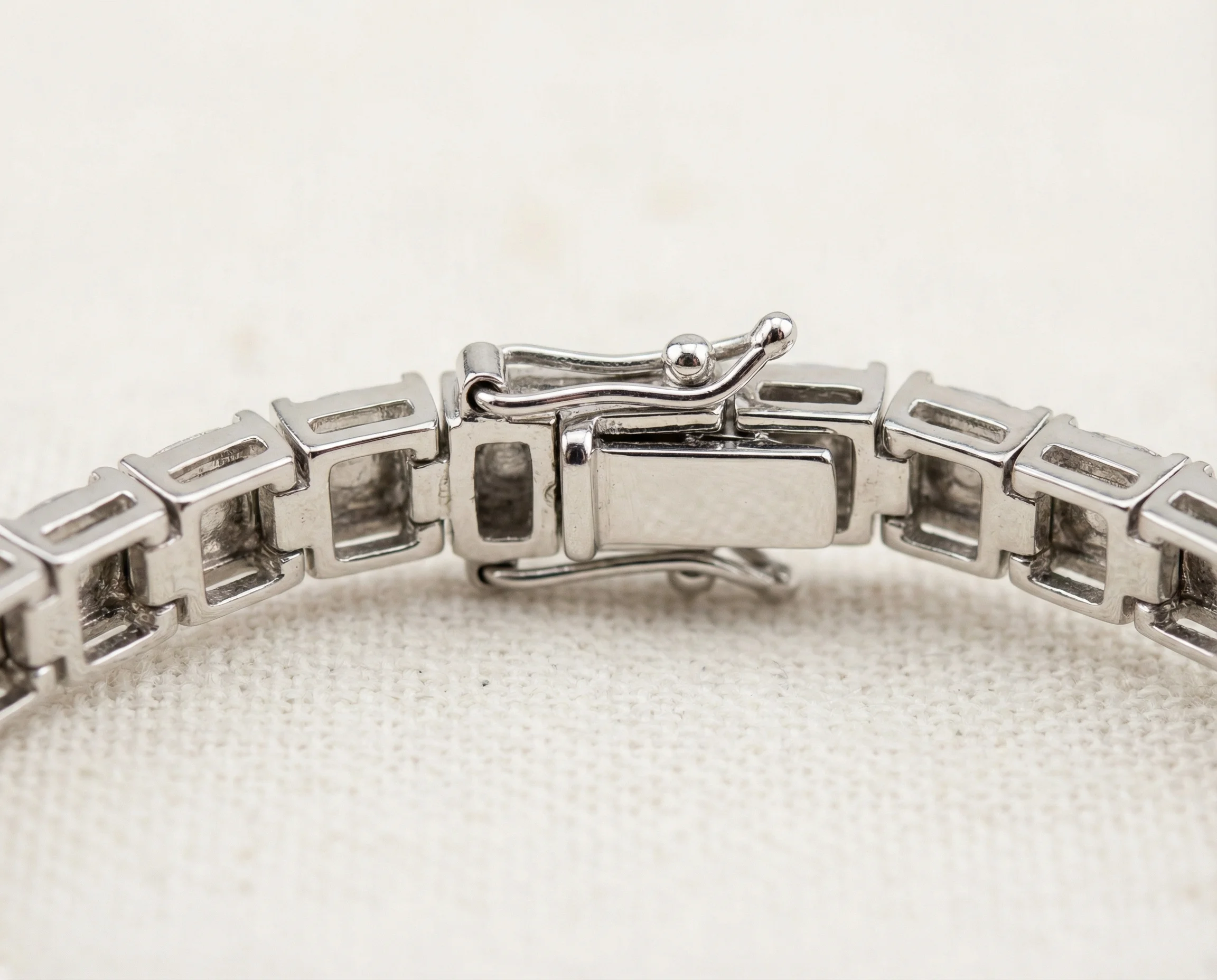
Box Clasp with Safety Latch
How it works: A small box on one end receives a wedge-shaped piece that clicks into place. A secondary safety latch folds over for extra security.
Security level: ⭐⭐⭐⭐⭐ (Highest)
Best for: Expensive pieces, active wearers, daily wear
This is the gold standard for tennis bracelets. The double-security system means even if the main clasp somehow opens, the safety catch keeps the bracelet on your wrist.
Lobster Claw Clasp
How it works: Spring-loaded claw opens and closes around a ring or bar.
Security level: ⭐⭐⭐
Best for: Tennis chains, layered jewelry, lighter pieces
Common on chains but less secure for bracelets because there's no secondary safety. The spring can weaken over time.
Tongue Clasp
How it works: A curved piece of metal bends and slides into a box.
Security level: ⭐⭐⭐⭐
Best for: Traditional designs, moderate activity
Secure when new but can loosen with age. Often paired with a figure-8 safety for extra protection.
Hidden Clasp
How it works: Clasp designed to look like another link in the bracelet.
Security level: ⭐⭐⭐⭐ (varies by design)
Best for: Those who want seamless appearance
Aesthetically beautiful but quality varies significantly. Always test security before purchase.
Security Features to Look For
- ✅ Double-locking mechanism: Two steps to open
- ✅ Figure-8 safety: Secondary catch that folds over
- ✅ Secure hinge: No wobble or loose feeling
- ✅ Smooth operation: Easy to close, difficult to accidentally open
Always test your clasp before wearing a new tennis bracelet out. Open and close it 10+ times to ensure it functions properly and feels secure.
Length Recommendations
Getting the right length ensures comfort and proper fit.
Tennis Bracelet Lengths
| Wrist Size | Recommended Length | Fit Type |
|---|---|---|
| 5.5" - 6" | 6.5" - 7" | Snug to comfortable |
| 6" - 6.5" | 7" - 7.5" | Snug to comfortable |
| 6.5" - 7" | 7.5" - 8" | Snug to comfortable |
| 7" - 7.5" | 8" - 8.5" | Snug to comfortable |
How to measure: Wrap a flexible measuring tape around your wrist where you'd wear the bracelet. Add 0.5" for a snug fit or 1" for a looser, more relaxed fit.
Preferred fit: Most people prefer tennis bracelets that move slightly on the wrist but don't slide over the hand. A good fit allows one finger to slip underneath comfortably.
Tennis Chain Lengths
| Length | Where It Sits | Best For |
|---|---|---|
| 16" | At collarbone | Women, choker style |
| 18" | Below collarbone | Women, classic look |
| 20" | At chest | Unisex, versatile |
| 22" | Mid-chest | Men, relaxed fit |
| 24" | Lower chest | Men, statement style |
Styling tip: Shorter chains (16-18") sit higher and are more visible above clothing. Longer chains (22-24") can be worn inside shirts for subtle flash or outside for full impact.
Care and Maintenance
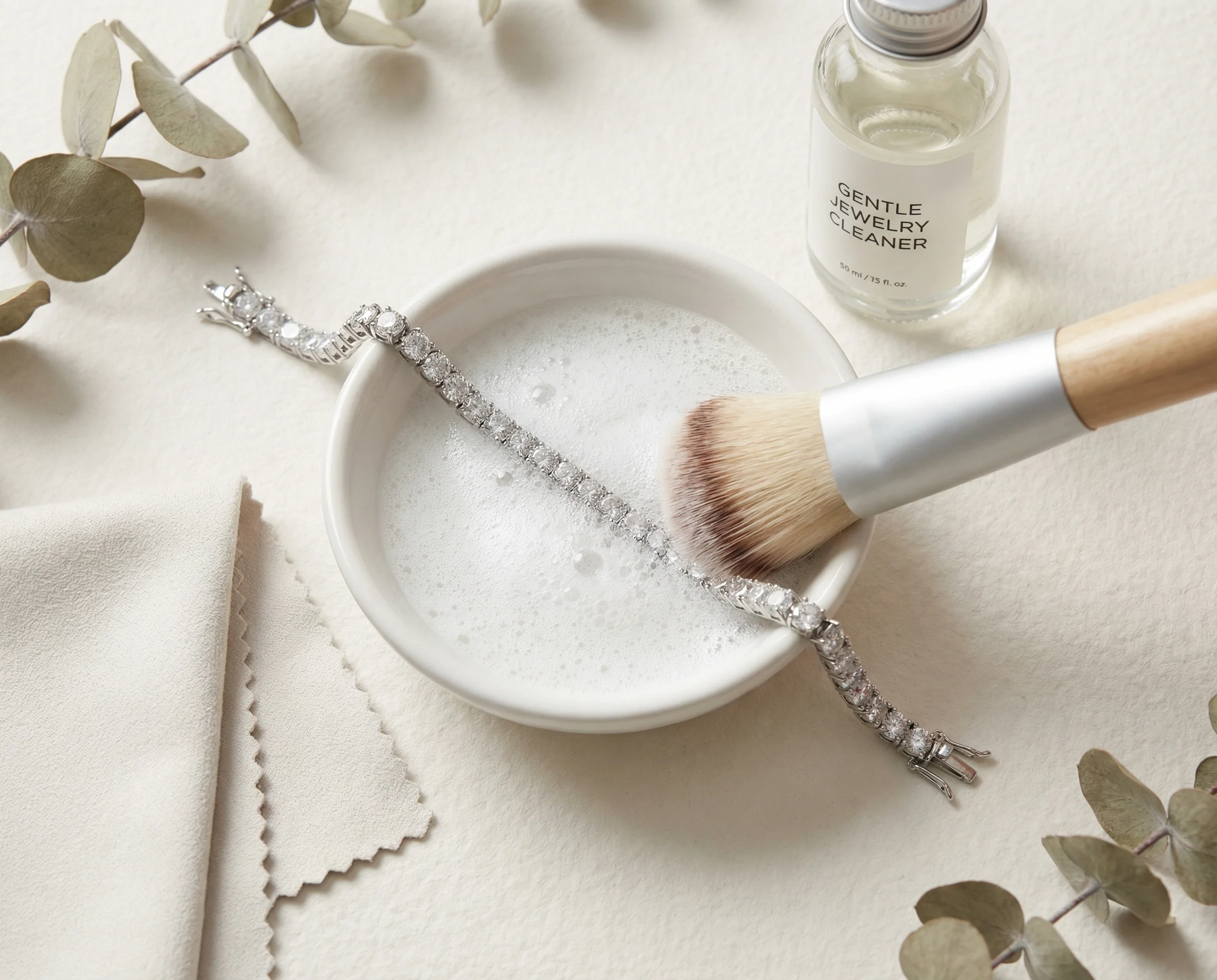
Moissanite tennis jewelry is durable, but proper care keeps it sparkling for decades.
Daily Care
- Remove before: Swimming (chlorine damages metal), heavy exercise, sleeping
- Put on last: After applying lotion, perfume, and hairspray
- Store separately: In a soft pouch or individual compartment to prevent scratching
Weekly Cleaning
- Mix mild dish soap with warm water
- Soak bracelet for 10-15 minutes
- Gently brush around each stone with a soft toothbrush
- Pay special attention to the back of stones where oils collect
- Rinse thoroughly under warm water
- Pat dry with lint-free cloth
Professional Maintenance
Every 6-12 months, have a jeweler:
- Check all stone settings for security
- Inspect clasp mechanism
- Clean ultrasonically (safe for moissanite)
- Polish metal to restore shine
- Tighten any loose components
Unlike some gemstones, moissanite won't cloud or lose brilliance over time. With basic care, your tennis bracelet will look as stunning in 20 years as it does today.
Storage Tips
- Keep clasped: Store bracelet in closed position to prevent kinking
- Avoid tangles: Don't store with other chains or necklaces
- Dry location: Humidity can tarnish silver settings faster
- Soft surface: Velvet-lined boxes or individual pouches are ideal
- Separate from harder items: While moissanite is very hard (9.25 Mohs), metal settings can scratch
When to Wear a Tennis Bracelet
One of the best things about moissanite tennis bracelets is their versatility.
Perfect Occasions
- Daily wear: 3mm bracelets work for office and casual settings
- Date nights: Any size adds romantic sparkle
- Weddings: Classic bridal accessory for bride or guests
- Formal events: Elegant statement without being overdressed
- Celebrations: Birthdays, anniversaries, promotions
Consider Removing For
- Contact sports: Risk of catching and breaking
- Heavy lifting: Strain on clasp and links
- Swimming: Chlorine damages metal over time
- Gardening/housework: Dirt buildup and potential damage
- Sleeping: Can snag or stress links
Frequently Asked Questions
How can I tell if a moissanite tennis bracelet is good quality?
Look for these signs:
- Consistent stone color: All stones should match in color grade
- Secure settings: Stones shouldn't wiggle when touched gently
- Smooth links: Bracelet should flex without catching or kinking
- Quality clasp: Double-locking mechanism with safety
- Proper finishing: No rough edges or visible tool marks
Will moissanite in a tennis bracelet pass as diamond?
To the naked eye, most people cannot distinguish moissanite from diamond. The key difference—moissanite's increased fire (rainbow flashes)—is often seen as a positive, making the bracelet even more eye-catching than diamond equivalents.
How much should I spend on a moissanite tennis bracelet?
Quality moissanite tennis bracelets typically range from:
- Sterling silver, 3mm: $150-$400
- 14K gold, 3mm: $400-$800
- 14K gold, 4mm: $600-$1,200
- 14K gold, 5mm: $1,000-$2,000
These prices represent 90-95% savings compared to equivalent diamond pieces.
Can men wear tennis bracelets?
Absolutely. Tennis bracelets have become increasingly popular in men's fashion. For masculine styling:
- Choose 4mm-5mm stones for bolder impact
- Consider yellow gold for warmth or white gold for versatility
- Look for slightly wider links for substantial feel
- Pair with a quality watch for refined look
How do I know what length to buy?
Measure your wrist with a flexible tape or string, then add:
- 0.5" for snug fit
- 0.75" for comfortable fit
- 1" for loose, relaxed fit
Most women's wrists measure 6-7", most men's 7-8.5". When in doubt, size up—a slightly loose bracelet is more comfortable than one that's too tight.
Do tennis bracelets break easily?
Quality tennis bracelets are surprisingly durable, but they can break if:
- Caught on something and pulled hard
- Exposed to repeated stress (sleeping in it, heavy exercise)
- The clasp fails due to wear
Choosing a bracelet with a box clasp and safety latch significantly reduces the risk of loss. Having links checked annually catches potential weak points before they fail.
Can I shower with my moissanite tennis bracelet?
While moissanite itself is fine with water, it's not recommended:
- Soap residue dulls sparkle over time
- Shampoo and conditioner can coat stones
- Hot water can stress metal components
- Risk of slipping off in the shower
Remove your bracelet before showering for best long-term results.
What's the difference between a tennis bracelet and a tennis necklace?
Both feature the same continuous line of stones, but:
- Tennis bracelet: Worn on wrist, typically 6.5-8" long
- Tennis necklace/chain: Worn around neck, typically 16-24" long
Tennis chains are also sometimes called "tennis necklaces" in women's jewelry and "tennis chains" in men's or streetwear contexts.
Final Thoughts
Tennis bracelets and chains represent timeless elegance—a single unbroken line of light around your wrist or neck. What was once a luxury reserved for those who could afford diamonds is now accessible to anyone who appreciates the beauty of brilliant gemstones.
The key is knowing what you want:
- For everyday elegance: 3mm stones in 14K white gold with a secure box clasp
- For balanced sparkle: 4mm stones that work from office to evening
- For bold statements: 5mm+ stones that command attention
- For men's jewelry: Larger stones (4-5mm) in substantial designs
Whatever you choose, moissanite delivers the sparkle, durability, and beauty that made tennis jewelry iconic—at a price that makes sense for real life.
Browse our tennis bracelets and tennis necklaces to find your perfect piece.
Related Articles
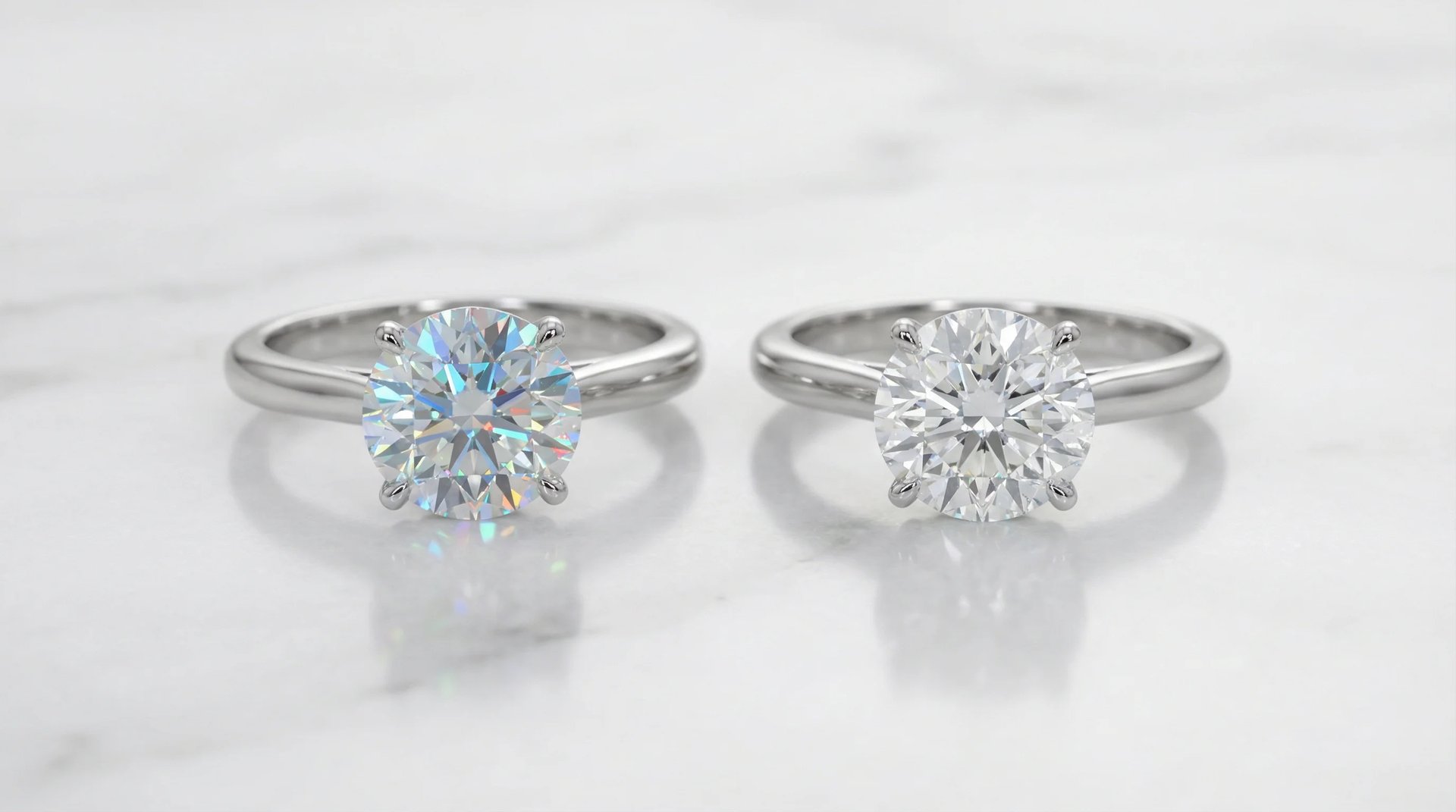
Moissanite vs Lab-Grown Diamond: Which Is Better Value in 2026?
Compare moissanite and lab-grown diamonds side by side. See the real price differences, visual comparisons, and which gemstone offers the best value for your budget.
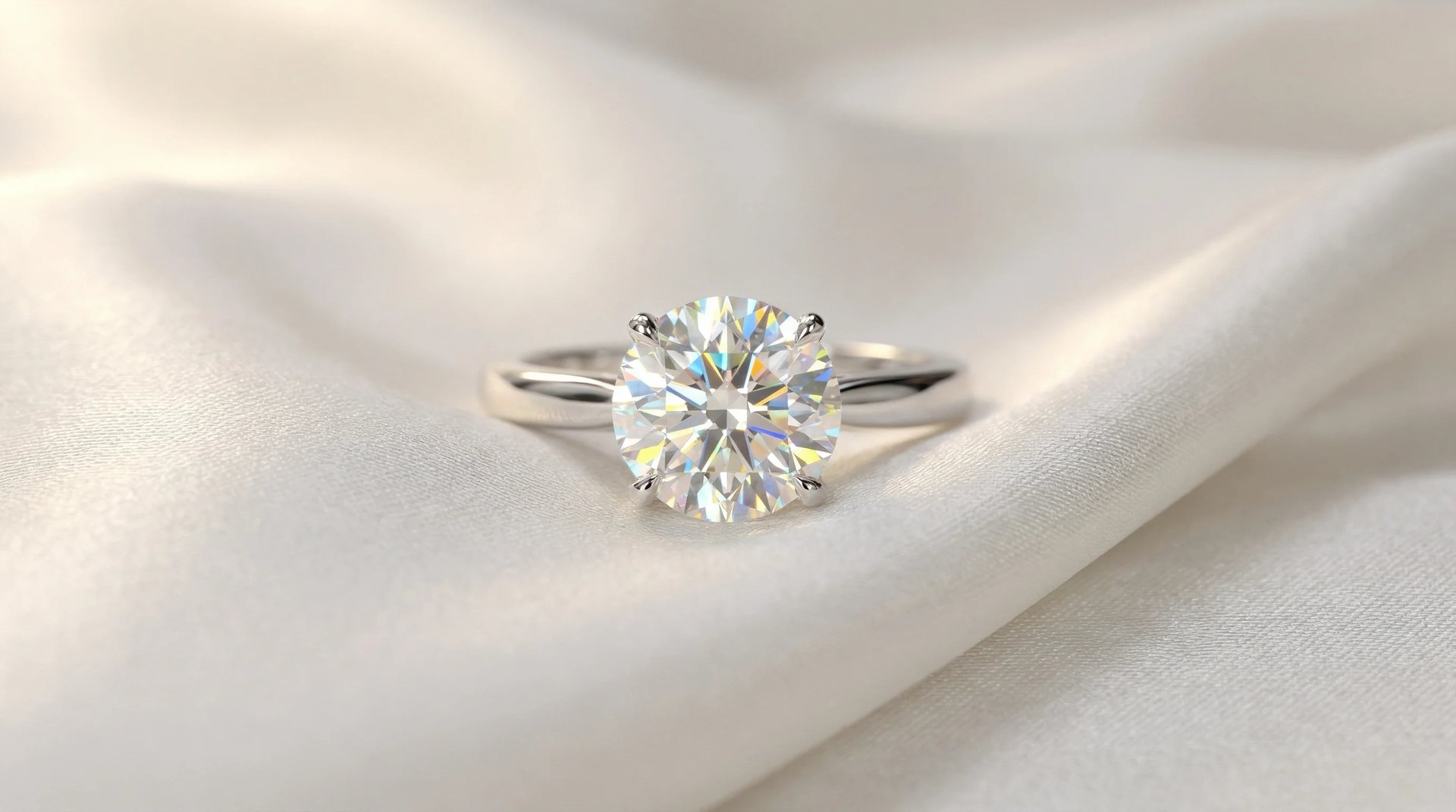
Does Moissanite Get Cloudy? Durability Myths Debunked (2026)
Worried about moissanite cloudiness? We debunk the top durability myths with scientific evidence. Learn why moissanite won't fade, scratch, or tarnish.
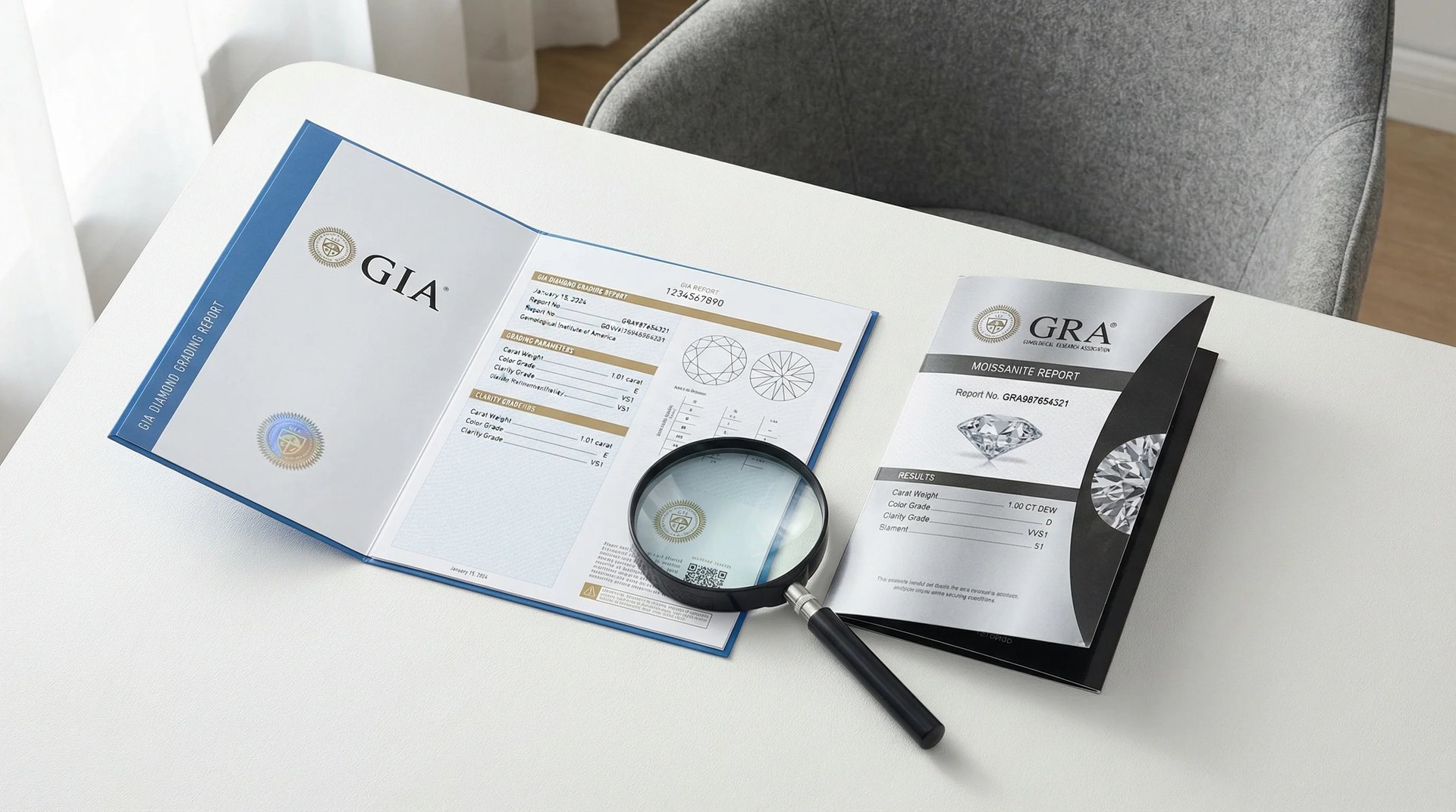
GRA Moissanite Certificates: What Buyers Need to Know (2026 Guide)
Learn why GRA moissanite certifications are unreliable and how to protect yourself. Expert guide to identifying trusted gemstone certifications from industry authorities.